
Morbegno – Collegiate Church of San Giovanni Battista
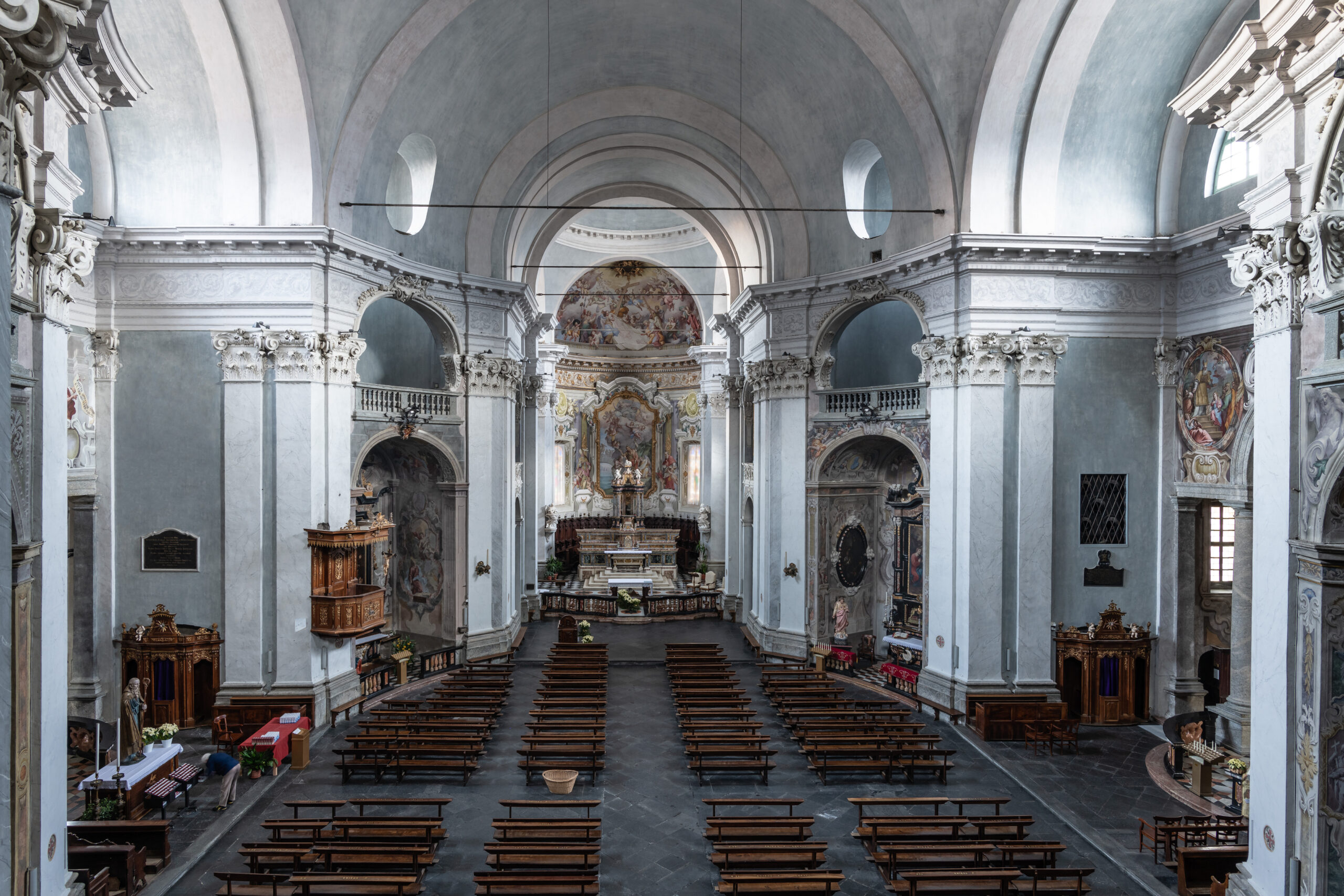
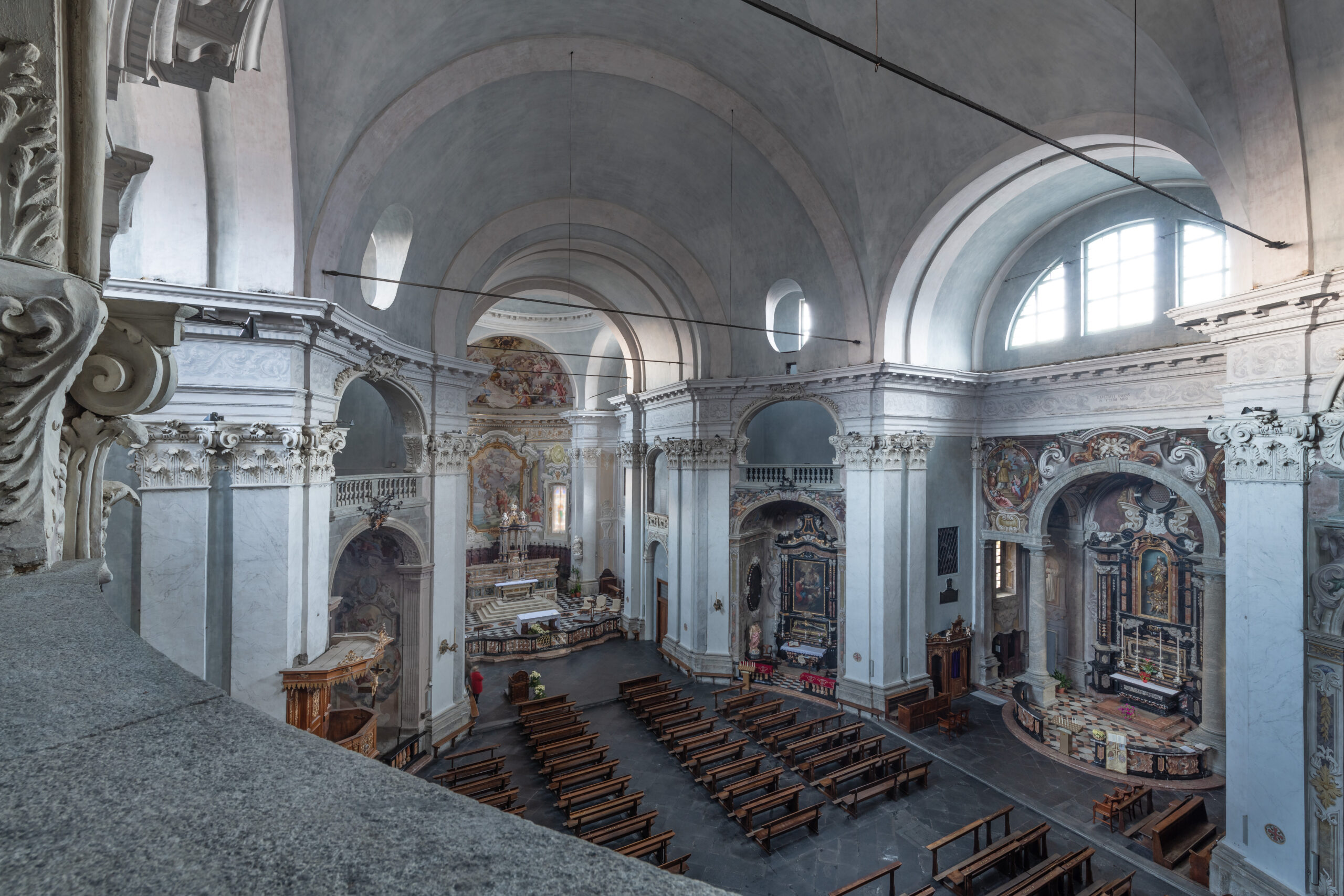
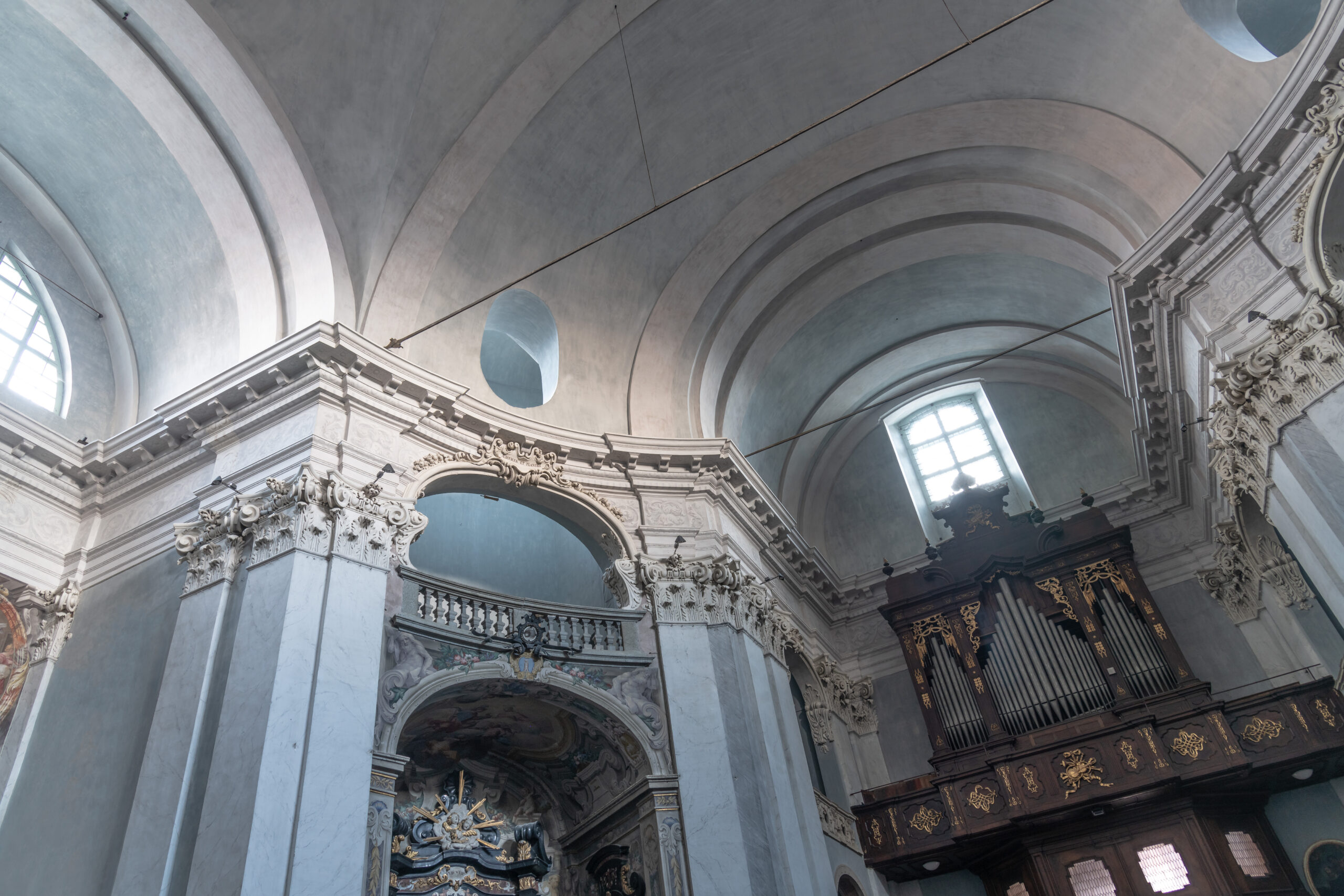
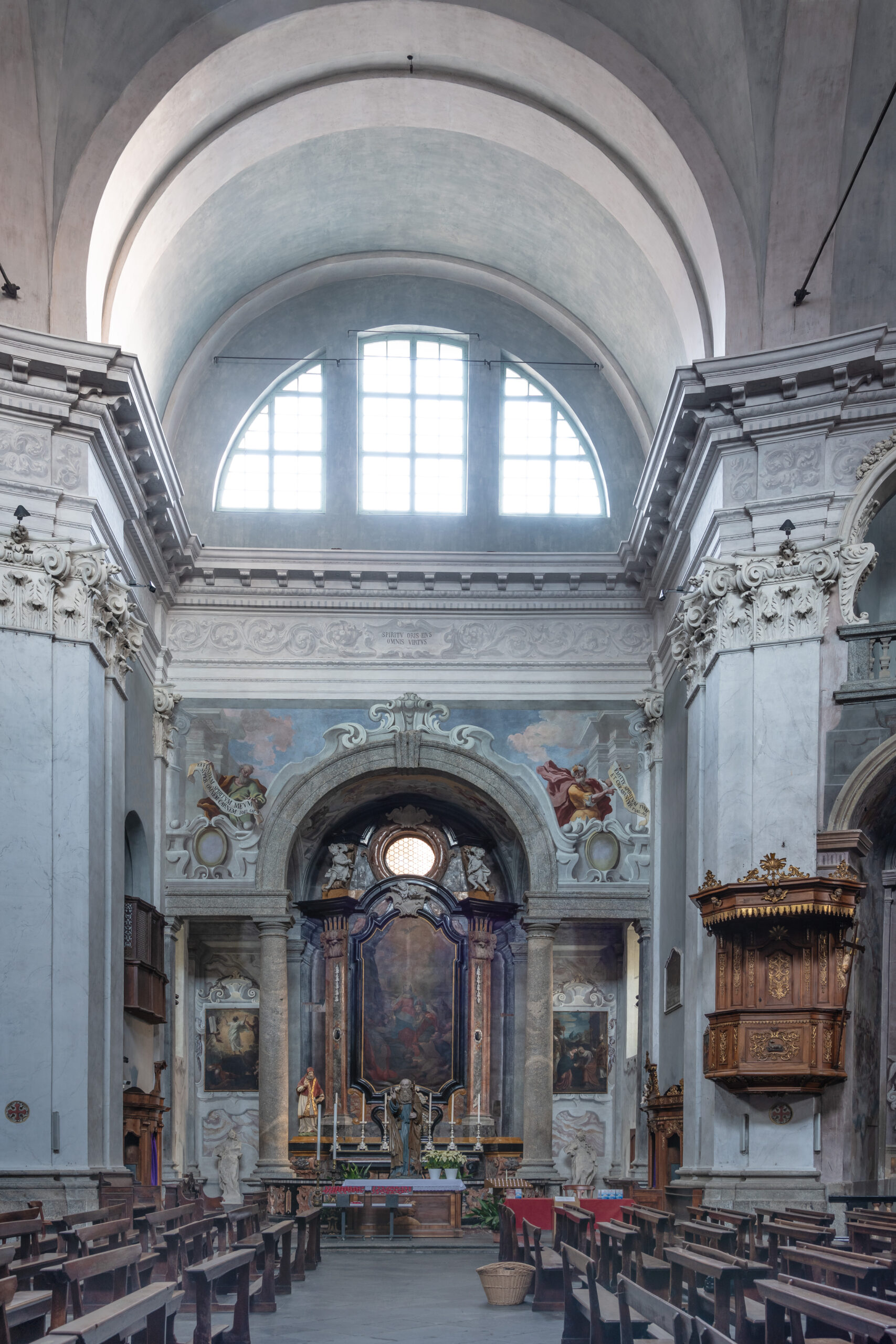
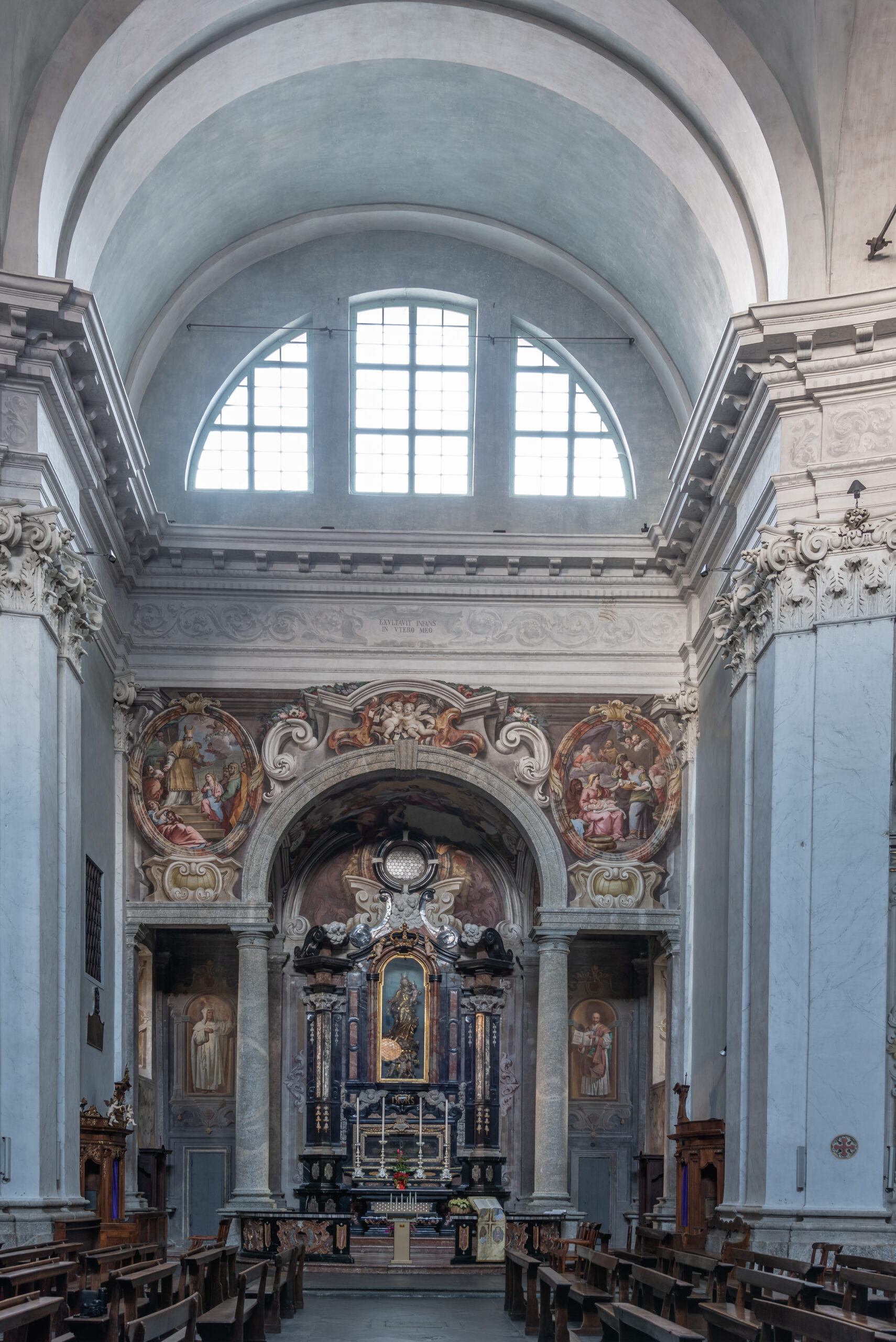
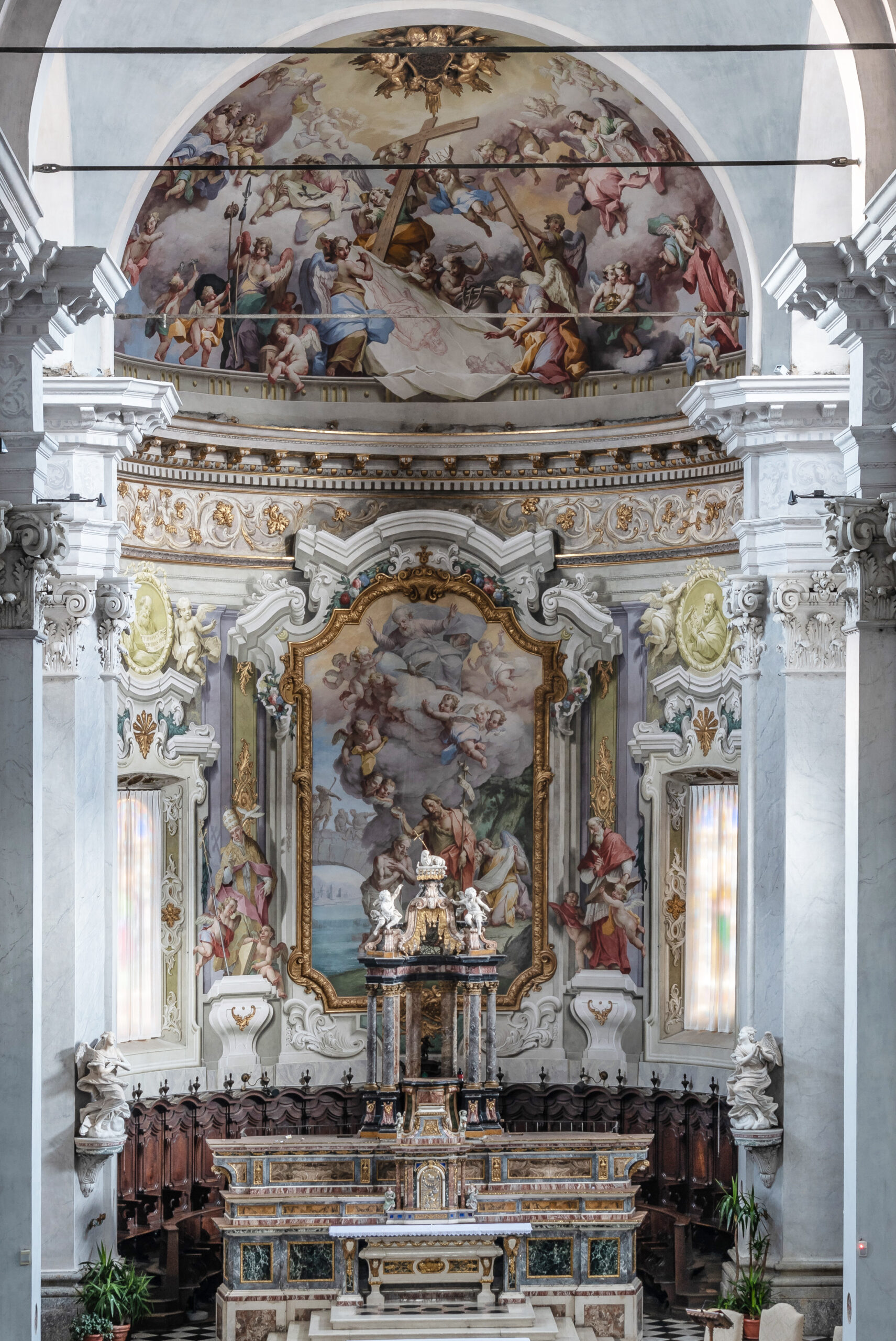
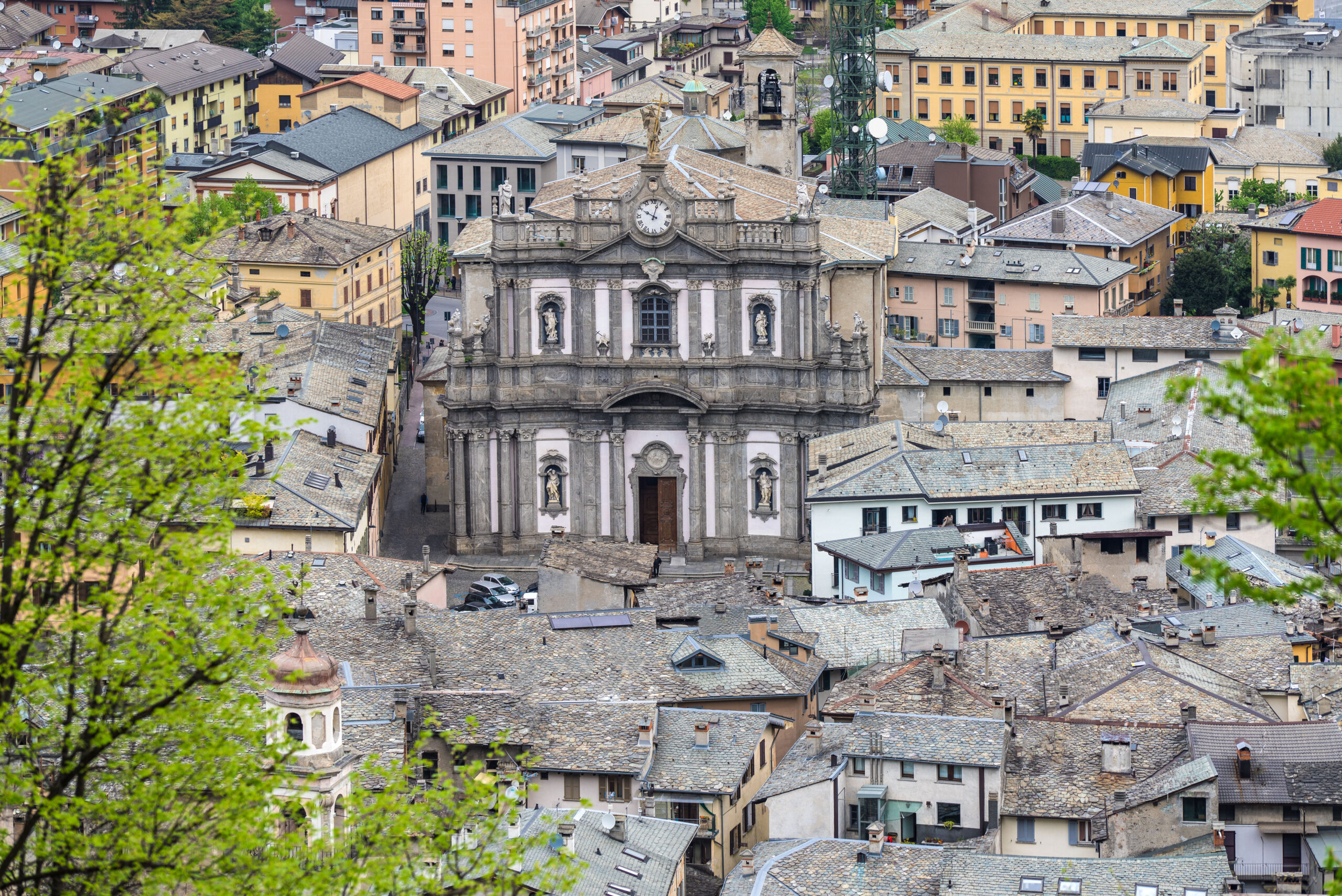
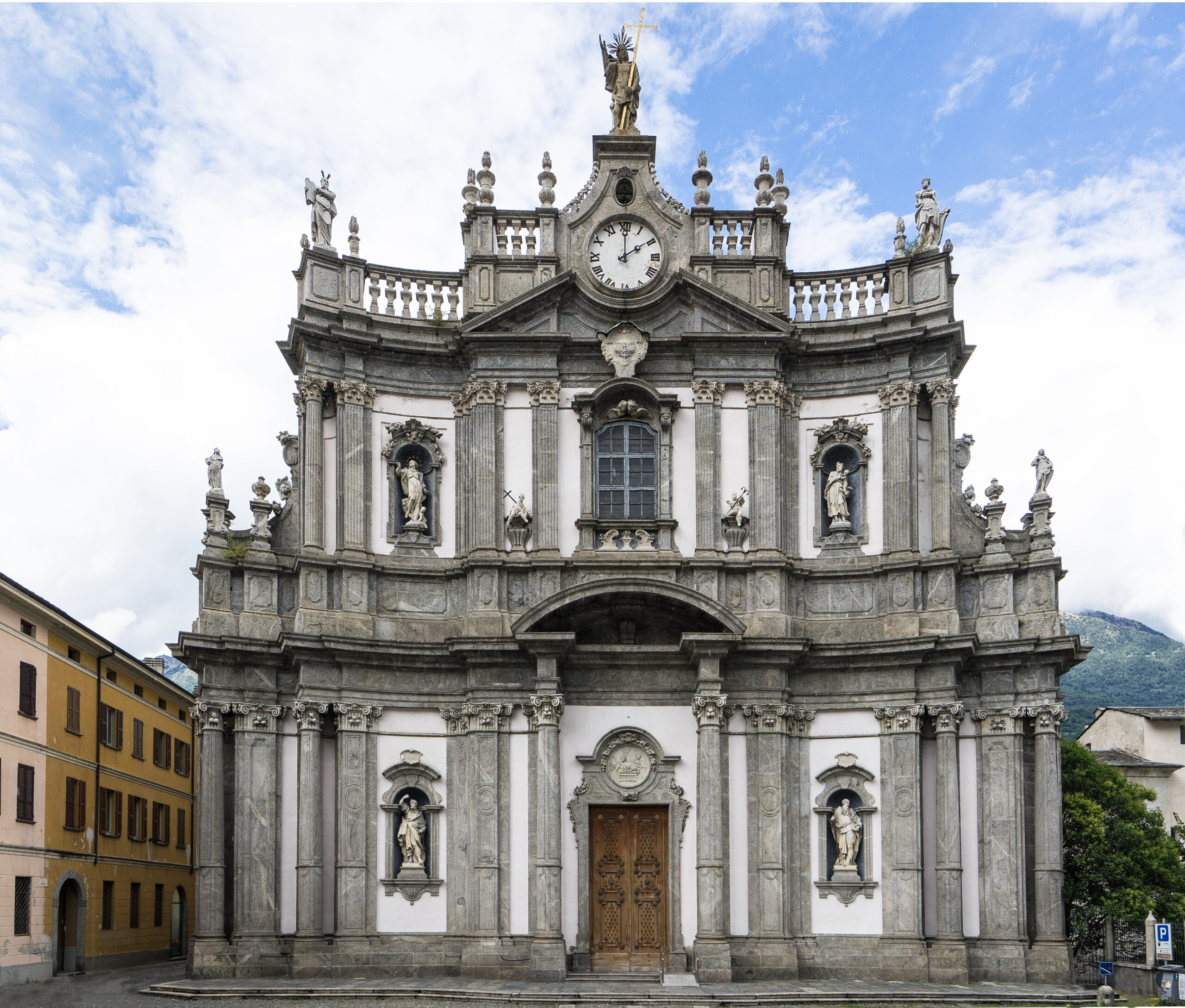
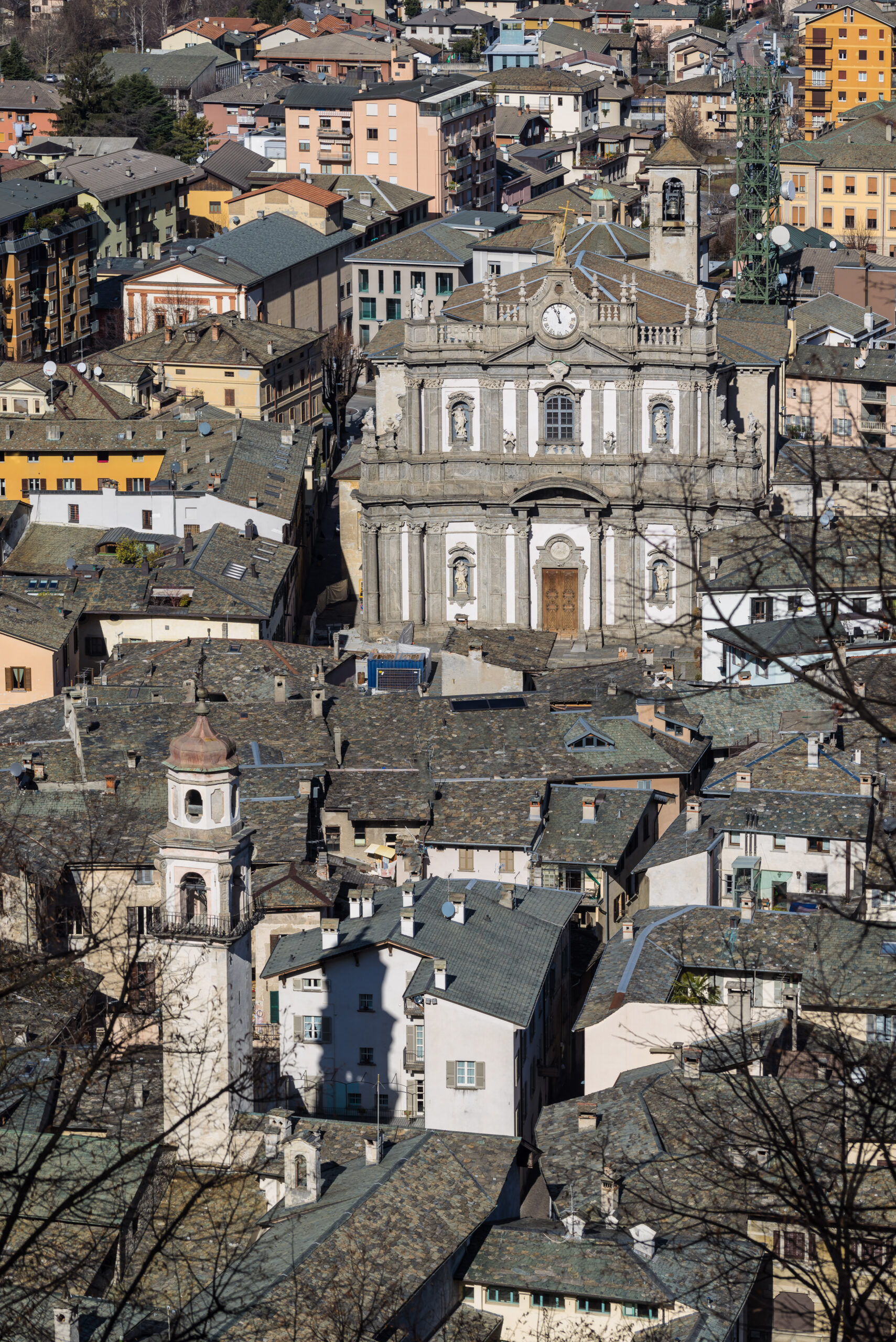
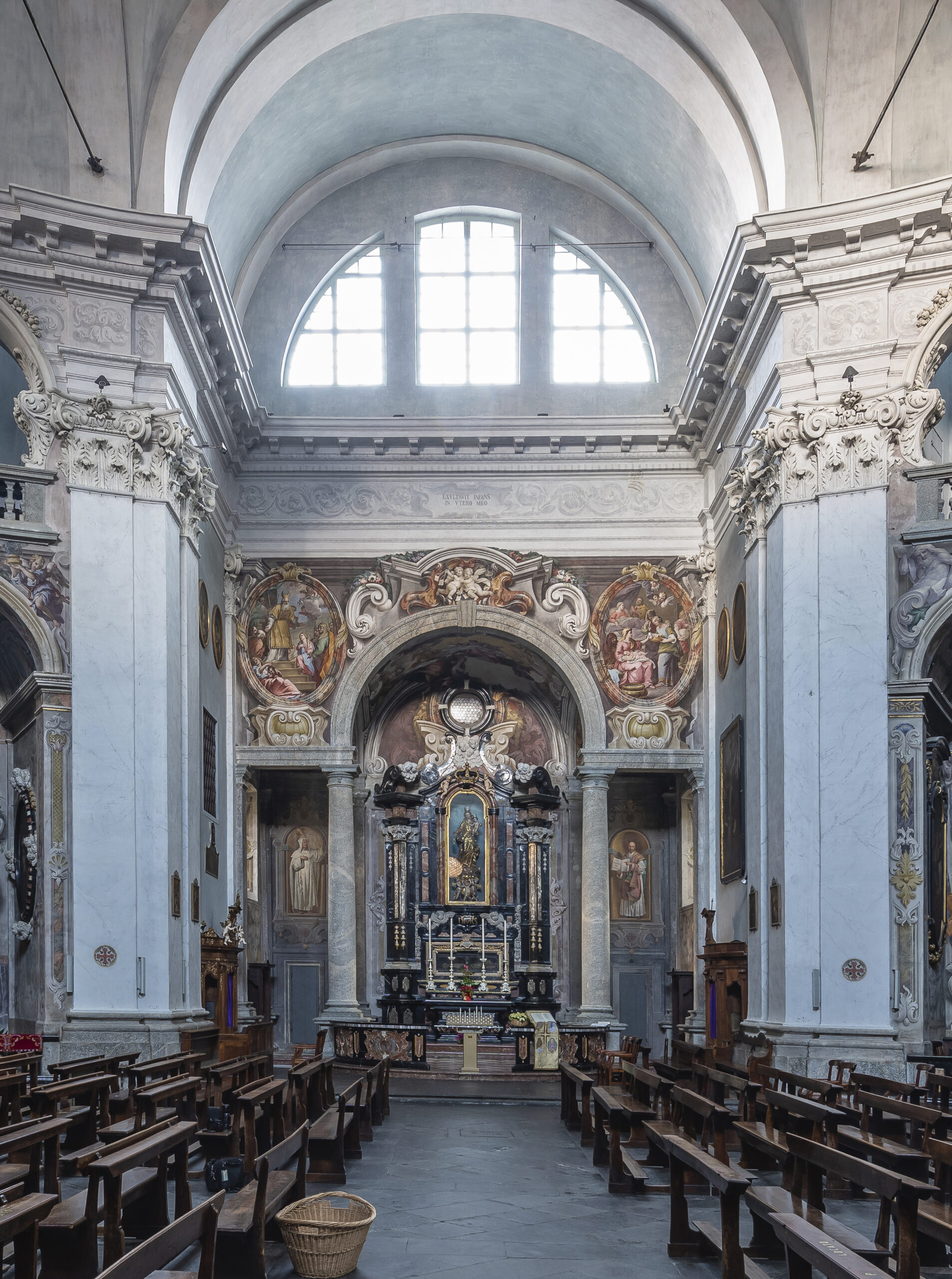
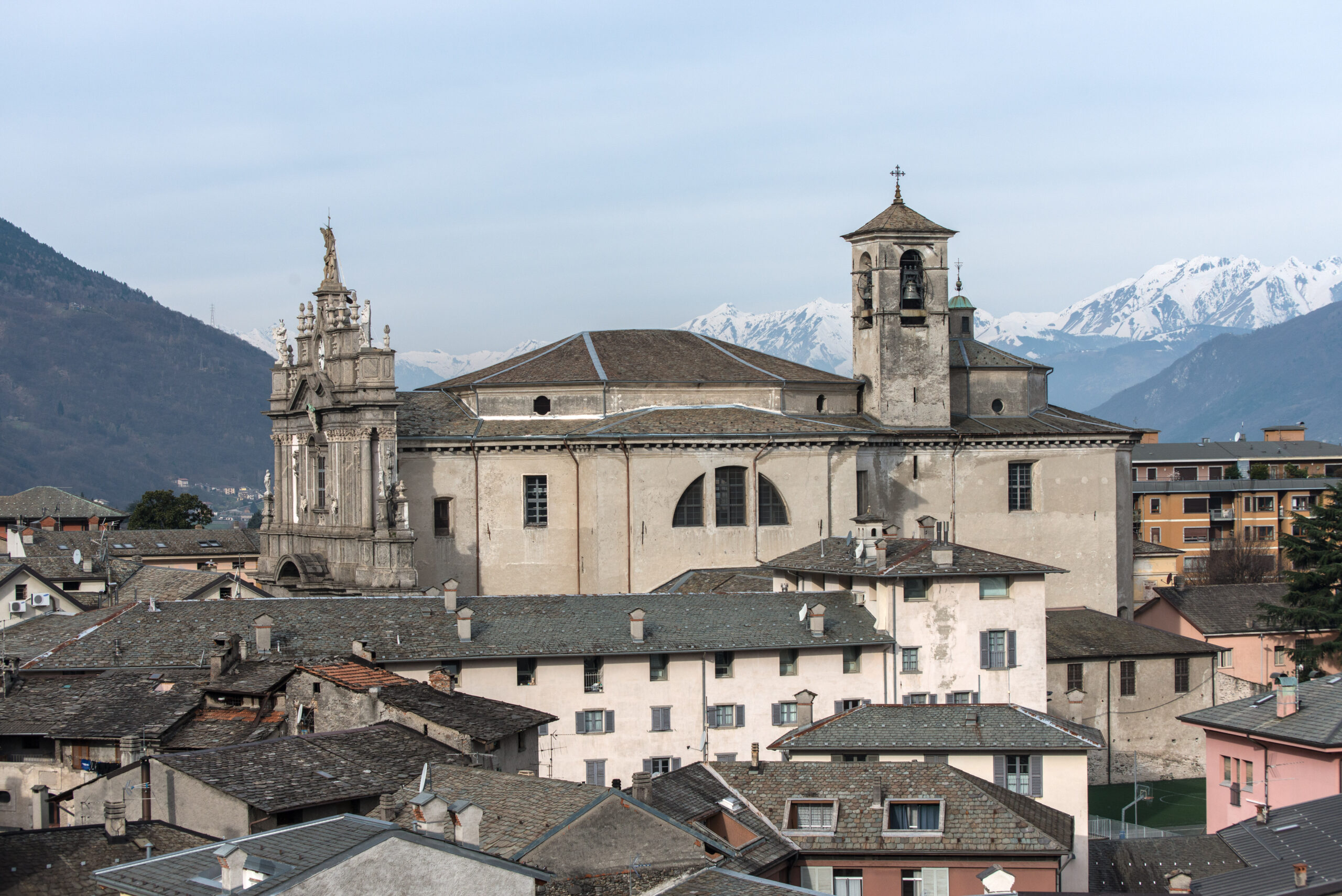
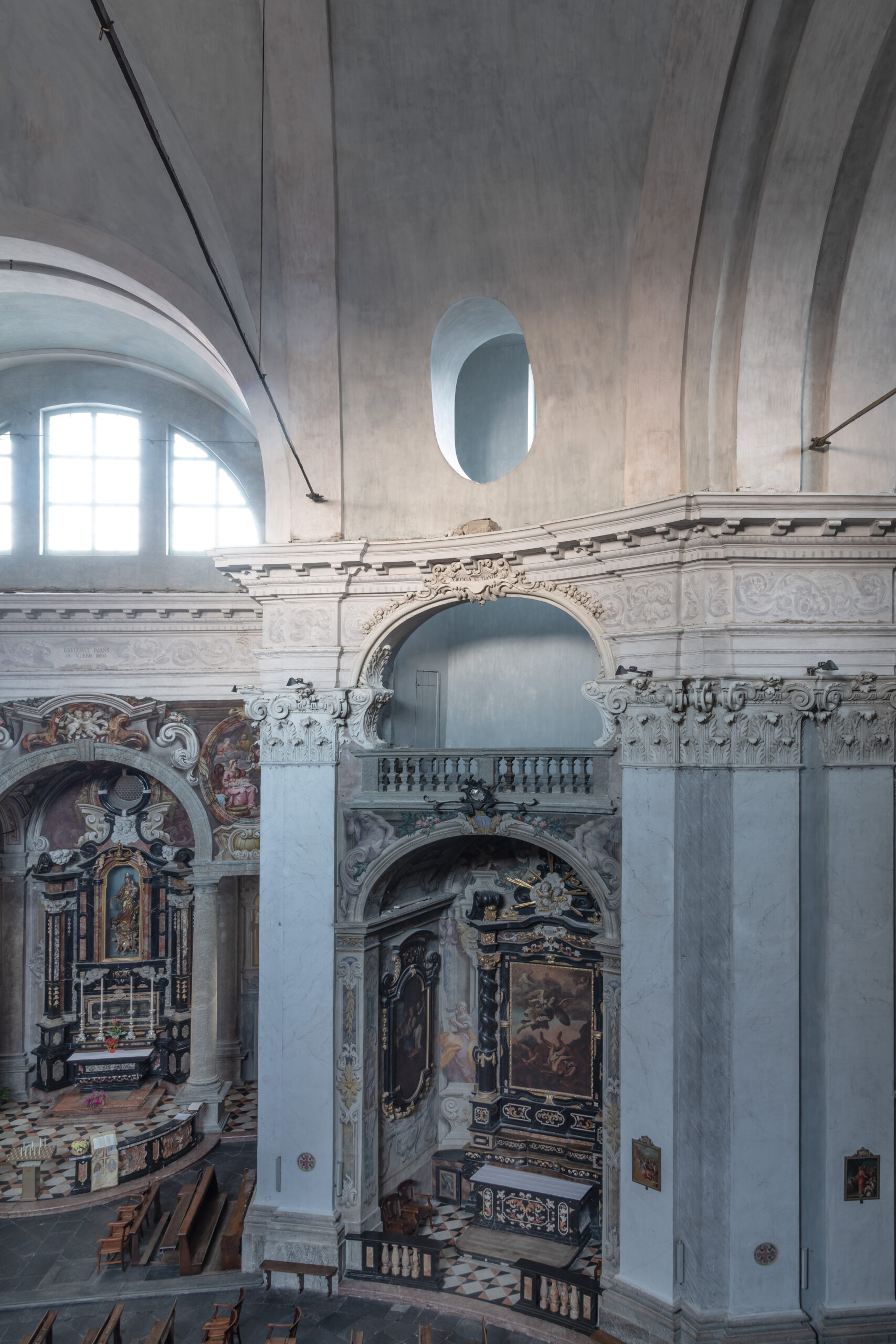
The monumental Collegiate Church of San Giovanni Battista in Morbegno, in the lower Valtellina, is the most significant Baroque church interior on either side of the Alps. Its creation was the result of an extraordinary convergence of personalities, cultural connections and historical circumstances.
Valtellina, long an important crossroads between northern and southern Europe, was also a sensitive political and religious border region between different confessions in the seventeenth century. It was in this context that the ambitious project of the wealthy and cultured archpriest Giovanni Battista Castelli Sannazzaro took shape, with the aim of creating a church of exceptional prestige in Morbegno.
Relations with Milan played a decisive role. Through mediation within the circle connected to the Odescalchi family, originally from Como, Castelli Sannazzaro came into contact with Gerolamo Quadrio (1625–1679), engineer and architect of the Veneranda Fabbrica del Duomo di Milano. Recent studies attribute the original design of the Collegiate Church to Quadrio, a work that may be regarded as the culmination of his architectural career.
Construction of the present church began on 14 April 1680, when the archpriest Giovanni Battista Castelli Sannazzaro, a patron and connoisseur of art, laid the foundation stone. In 1714, religious services were transferred to the new building, which was still unfinished; on 24 June 1780, the church was solemnly consecrated by Giovanni Battista Mugiasca, Bishop of Como.
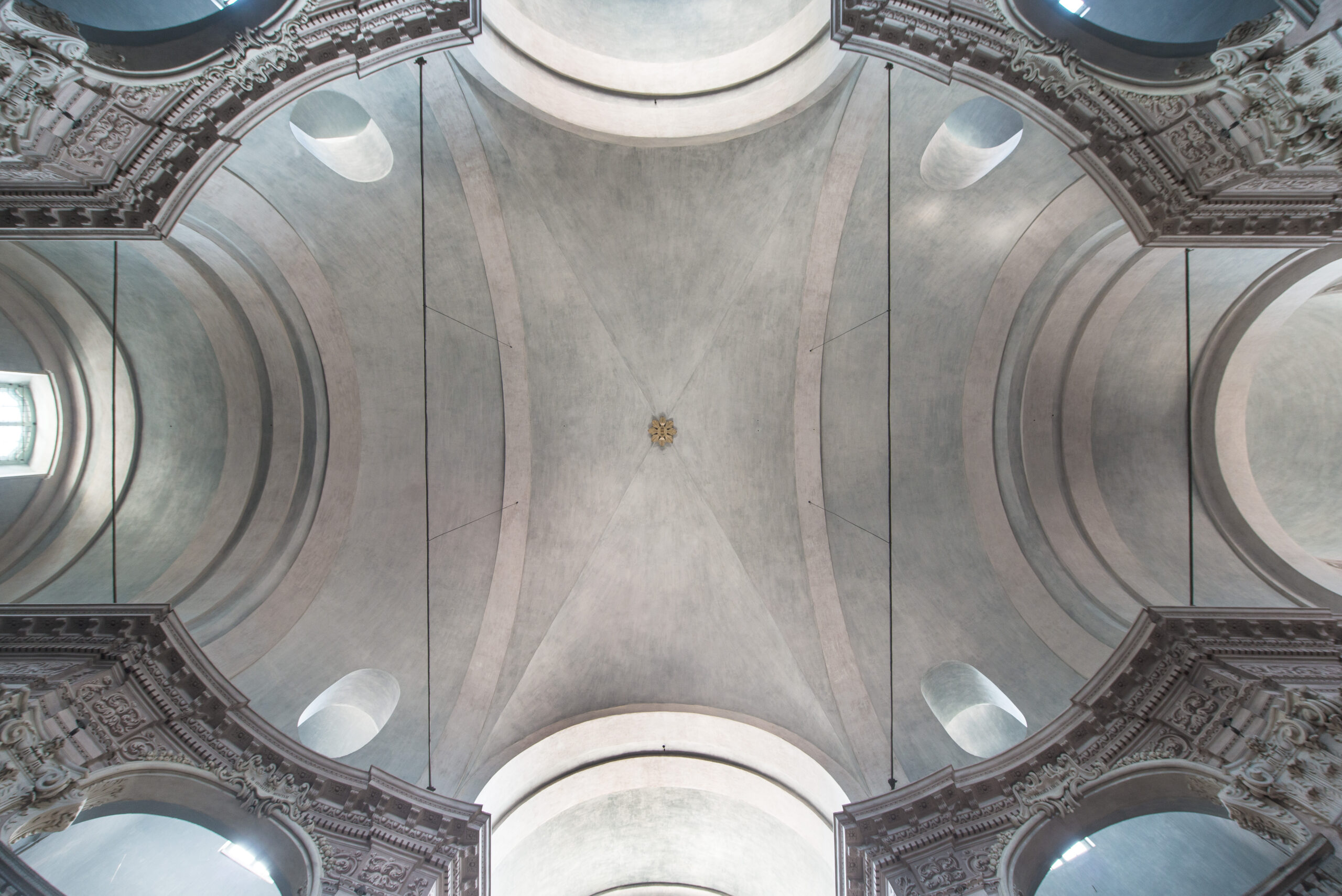
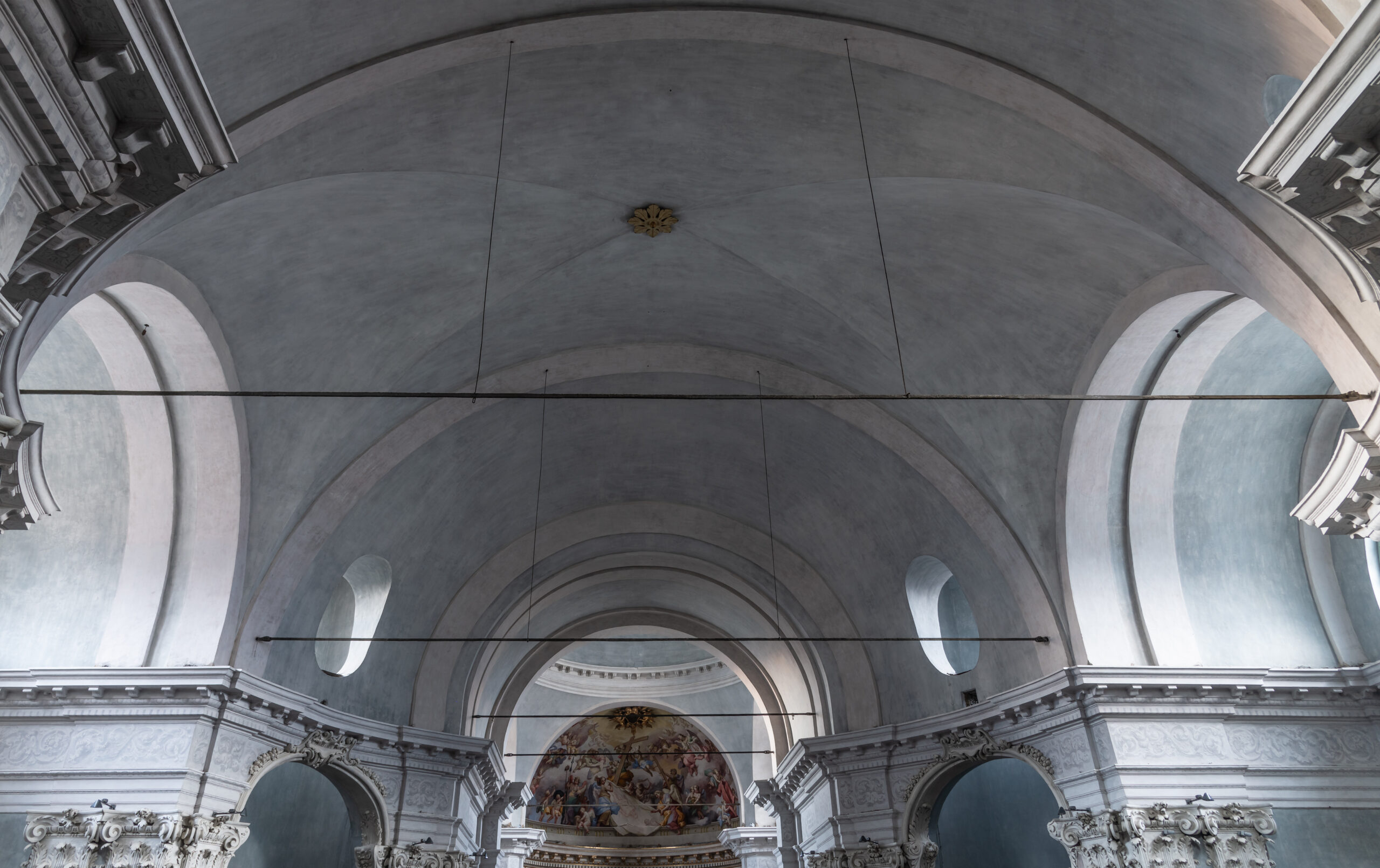
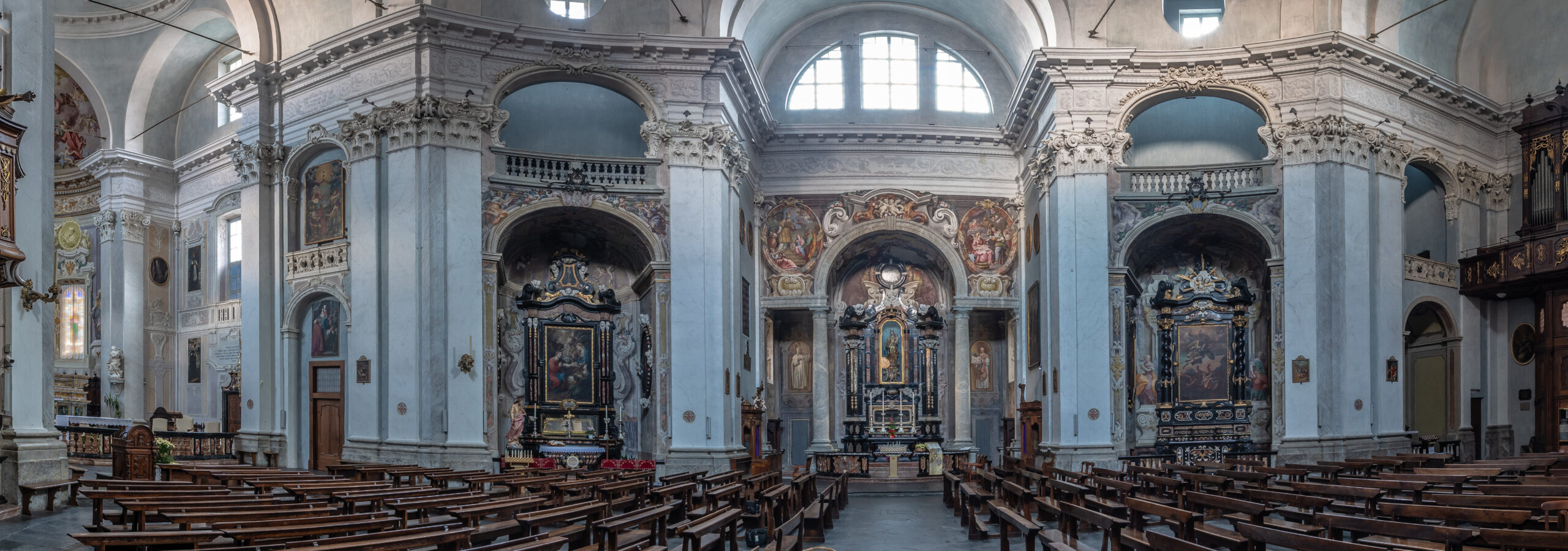
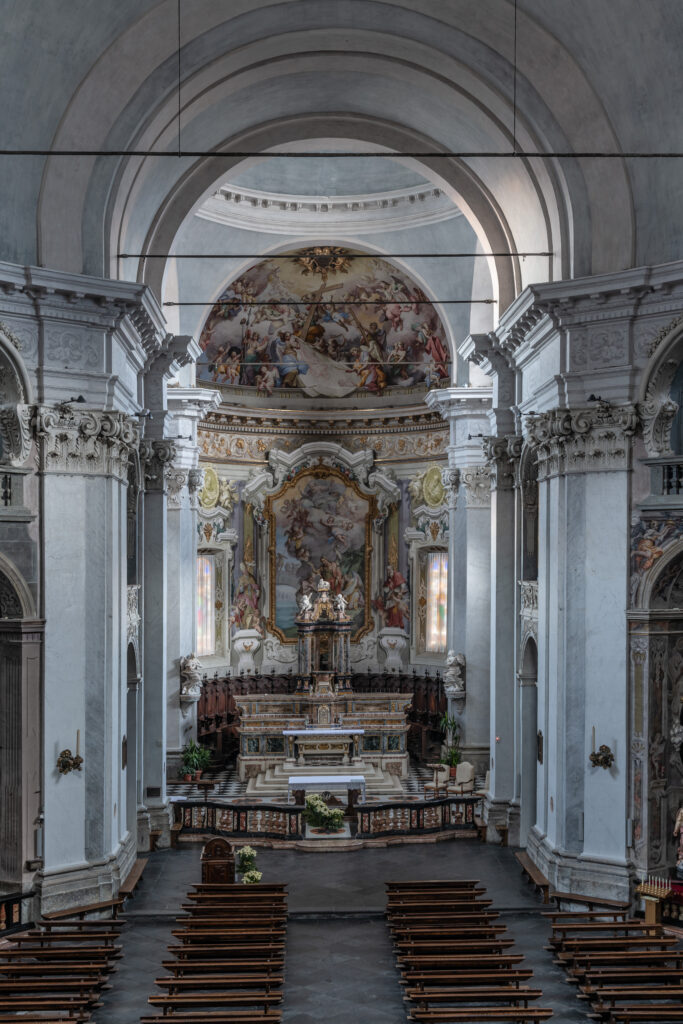
Built in a border region during the age of the Catholic Reformation, the Collegiate Church represents an important point of encounter between Italian sacred Baroque and its developments north of the Alps. Its influence extended to the great Baroque churches subsequently built in Switzerland, southern Germany, Austria and the Czech lands. Its innovative architectural scheme combines longitudinal and centralised plans within a unified monumental space, organised around a large oval hall and the surrounding chapels. Particularly original is its relationship with the neighbouring Monastery of the Presentation, which takes up the theme of the double convent church.
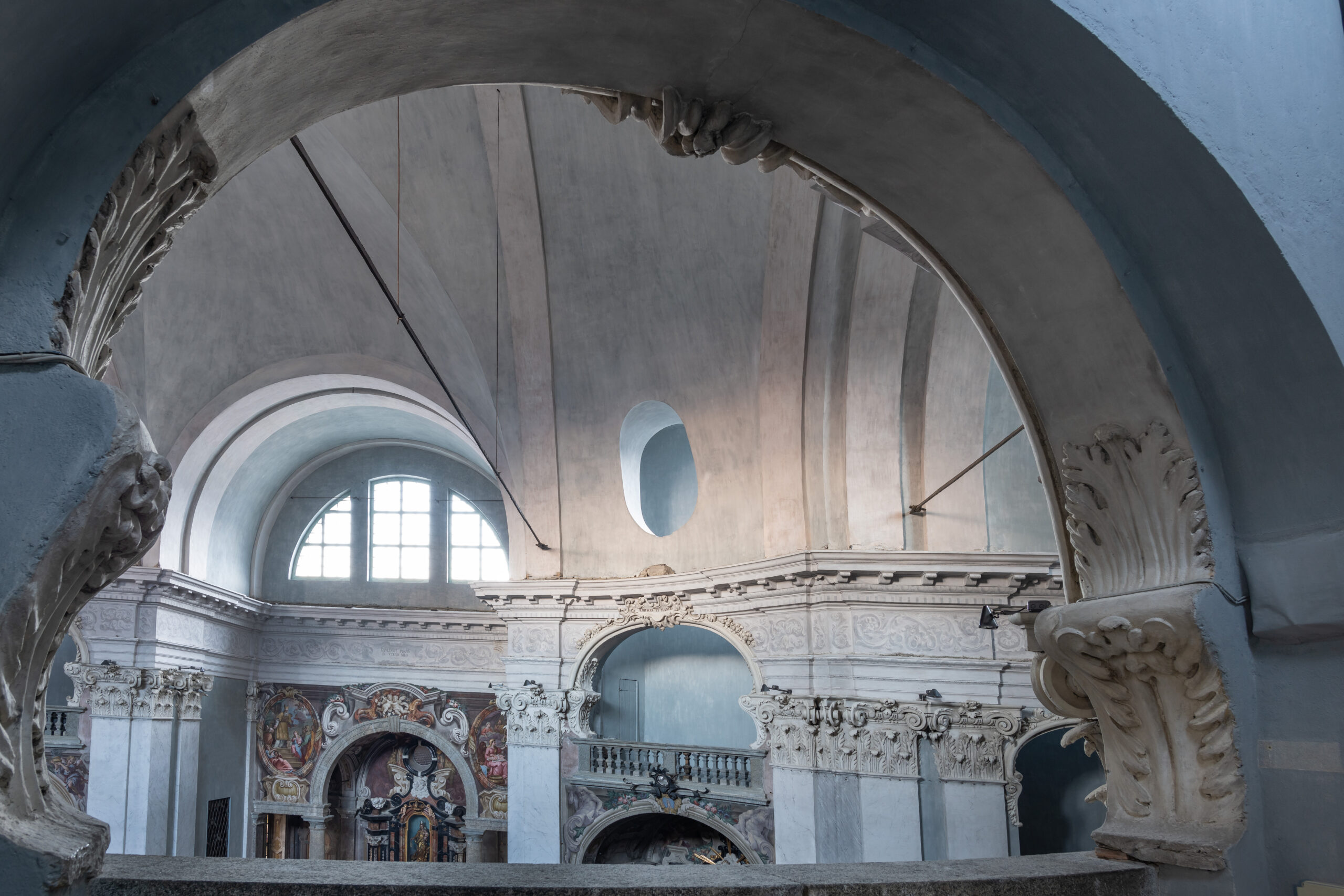
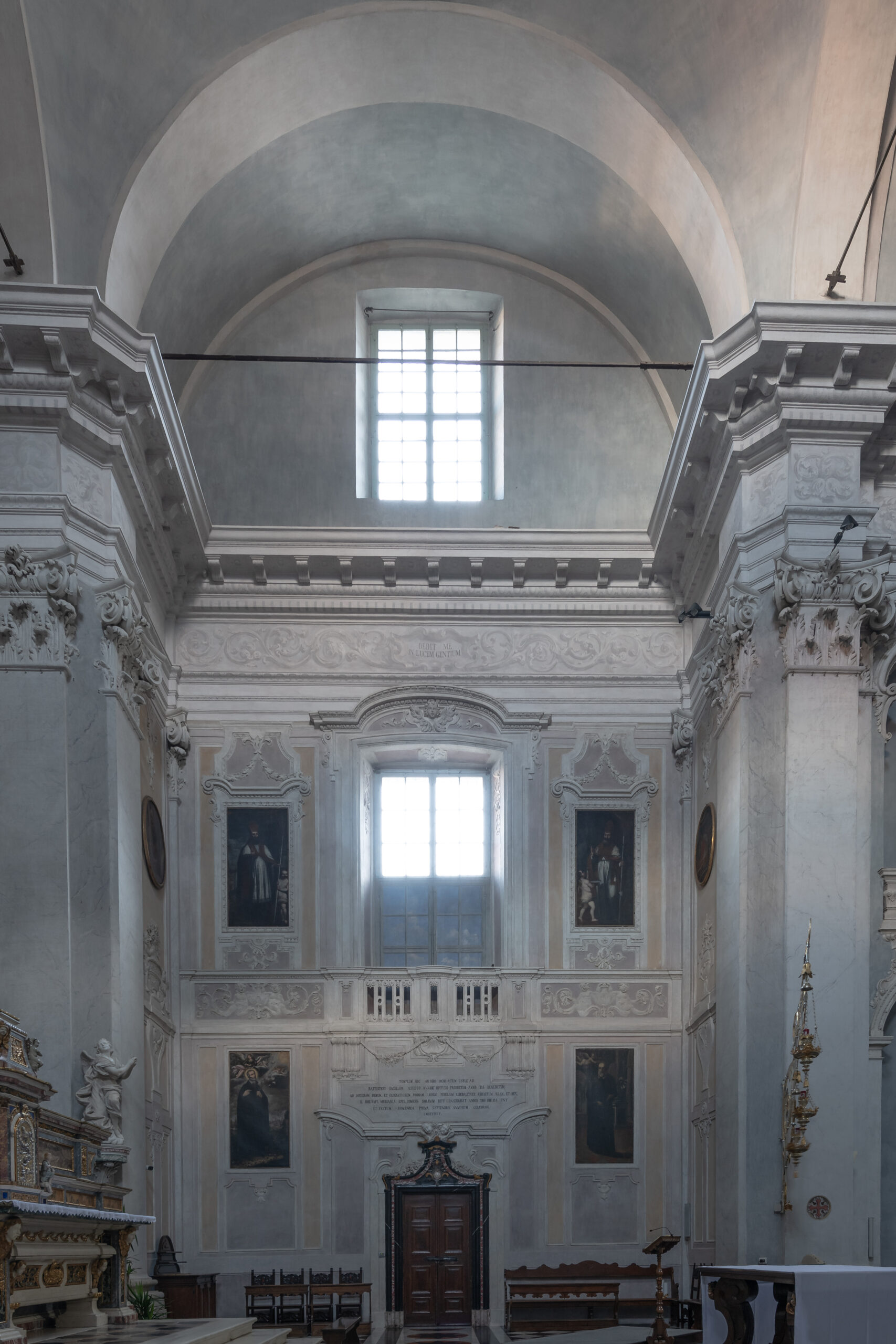
Architecture, – for once not with vaults overpainted – and light combine to create an interior of musical wealth and metaphysical power.
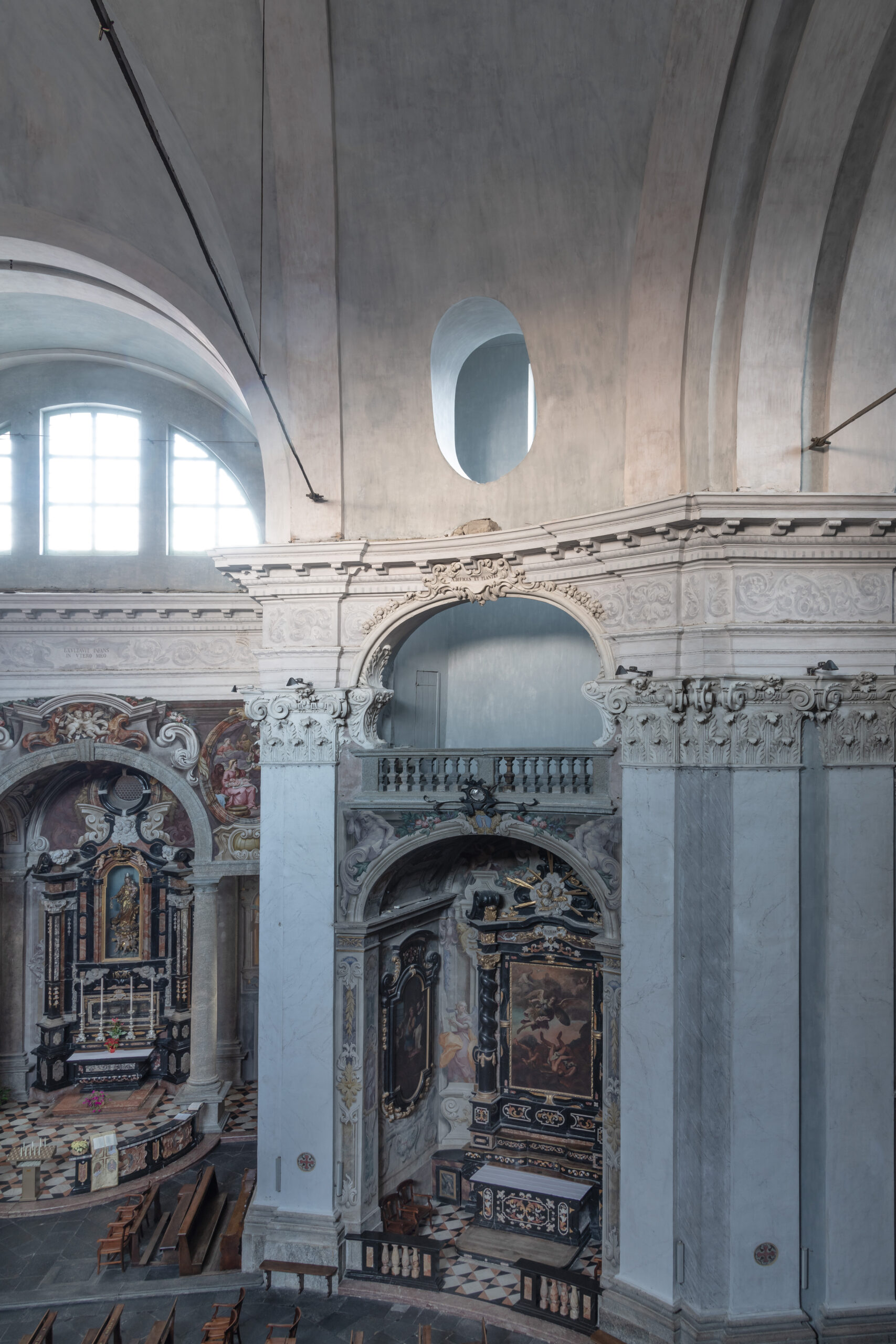
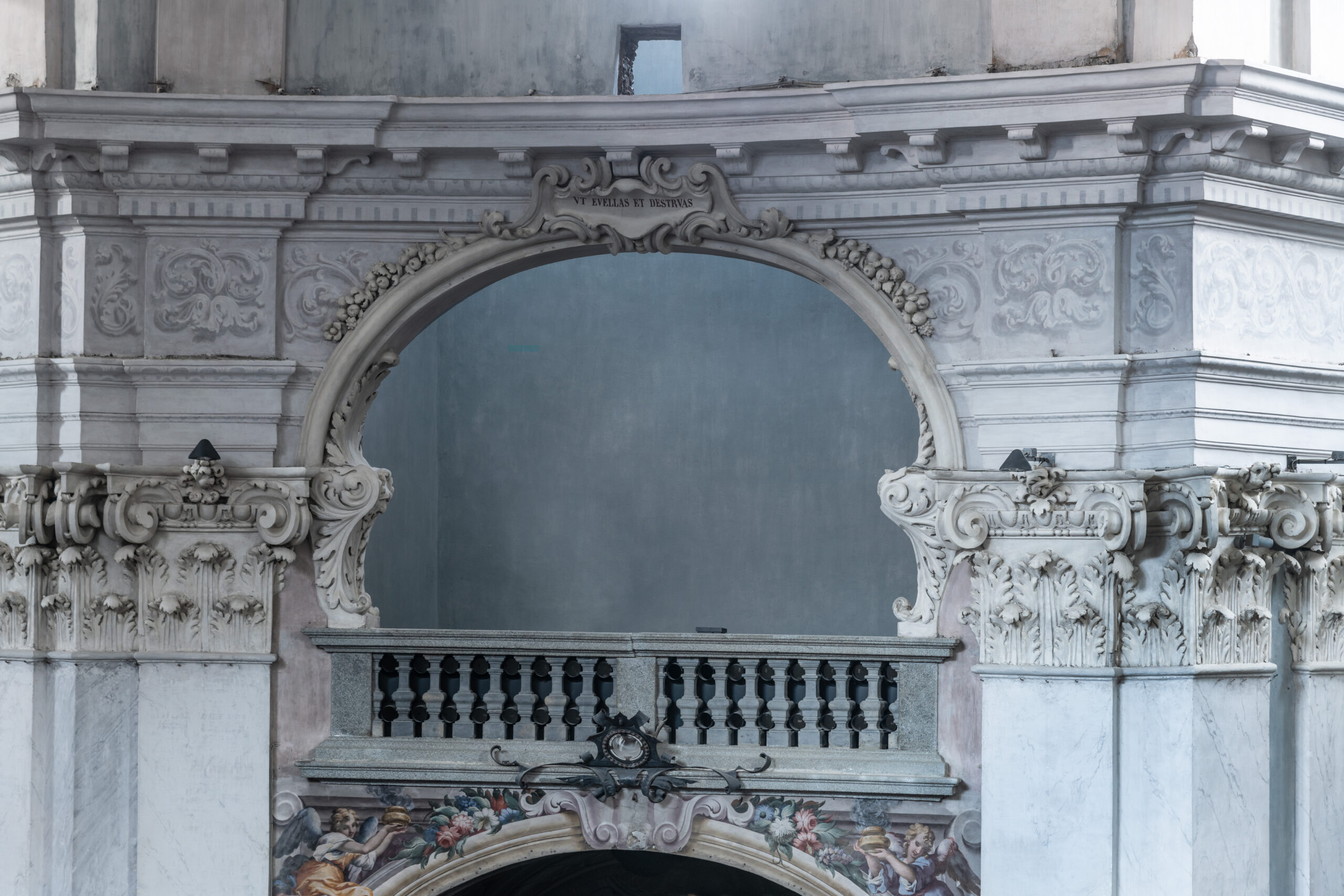
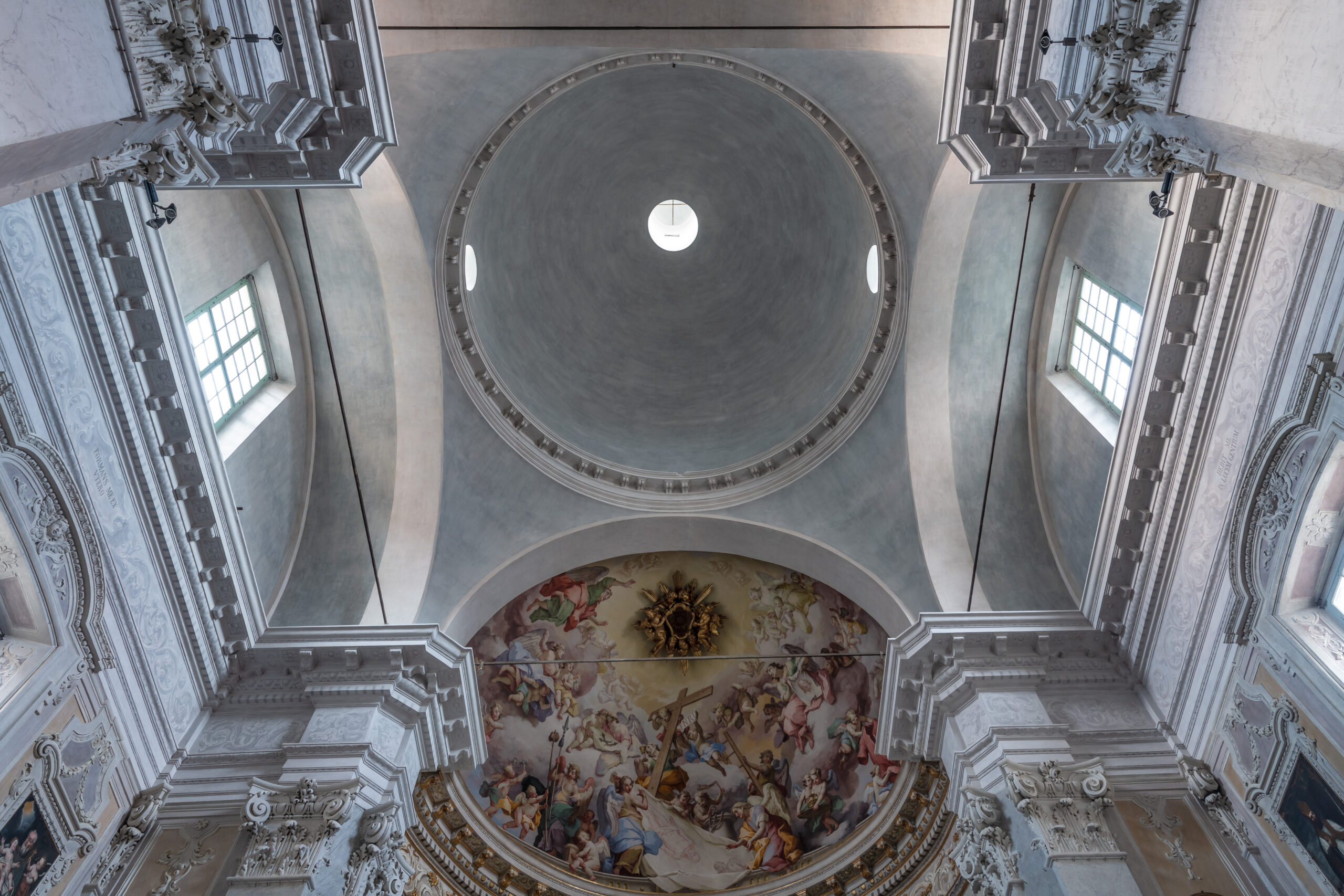
Particularly characteristic is the interplay of colour and light: the recovery of the original wall tones, historically described as the “colour of the air”, has restored the space’s delicate blue-grey character, further enhanced by the changing natural light over the course of the day and the seasons.
The conservation and enhancement programme
Over recent decades, the Collegiate Church has been the subject of an extensive conservation programme, which has made it possible to progressively recover a significant part of its extraordinary architectural and decorative heritage.
Since 2013, the Isabel und Balz Baechi Foundation has supported a multi-year programme of interventions devoted to the conservation of decorated surfaces, stuccowork, wall paintings and the historic organ, accompanying the restoration work with research, scientific study and public engagement.
2013 – Conservation of the interior surfaces and stuccowork of the Collegiate Church, excluding the frescoed surfaces.
2016 – Conservation of the surfaces of the presbytery and apse, entirely decorated with frescoes by Pietro Ligari.
2018 – Reversible chromatic glazing of the decoration of the entire entablature, with the aim of achieving a more balanced and legible perception of the architectural and decorative unity of the whole.
2019 – Renewal and integration of the Collegiate Church’s lighting system.
2020 – Conservation of Pietro Ligari’s frescoes in the Chapel of the Archangel Michael.
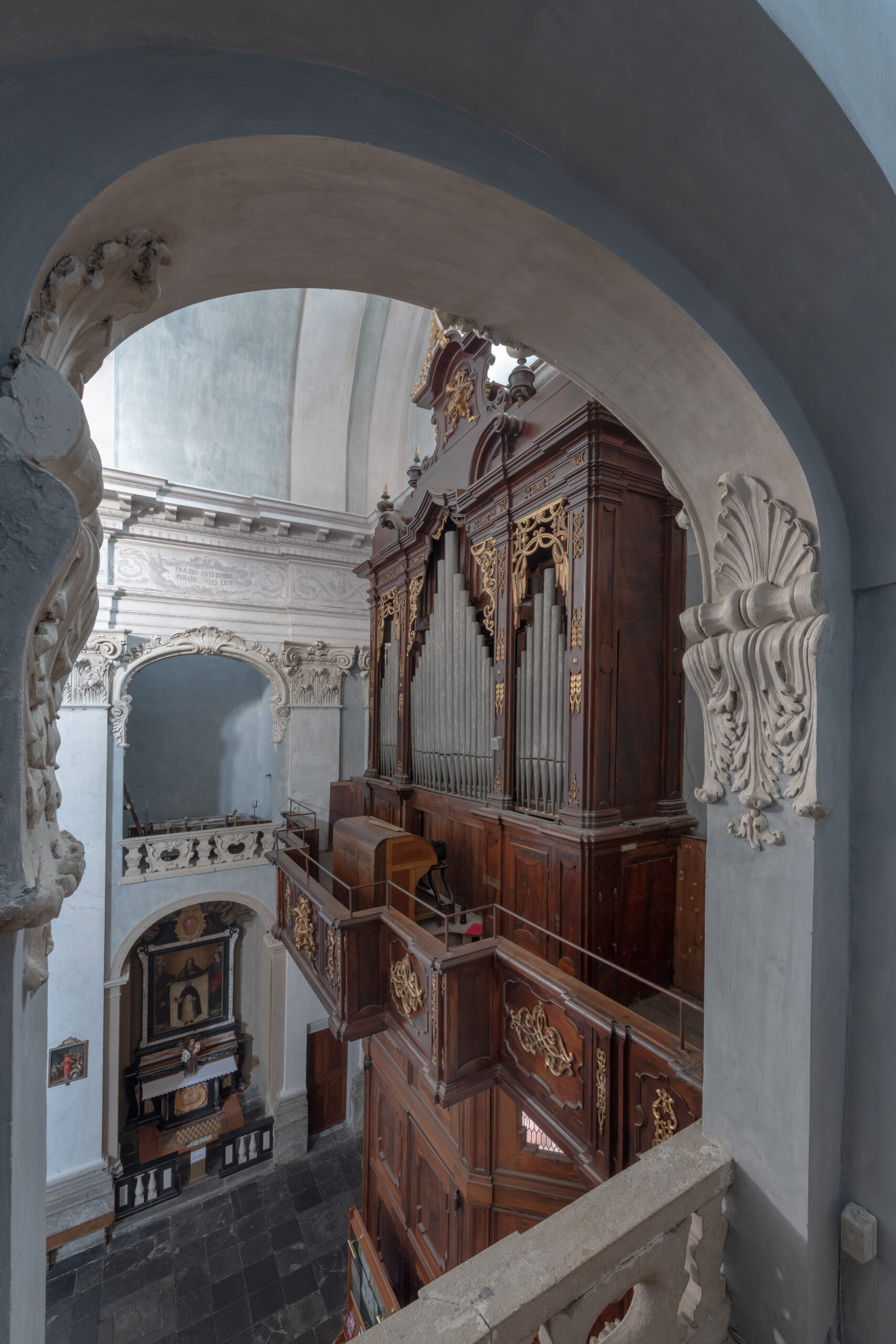
2021 – Conservation of the historic organ, together with other supporters.
2023 – Support for the competition for the liturgical redesign of the Collegiate Church.
The Foundation’s commitment has not been limited to the material conservation of the monument. Alongside the restoration work, it has supported international conferences, studies, publications, concerts and events open to the public, with the aim of sharing the knowledge gained during the work and encouraging new research into the history of the Collegiate Church.
The conservation site thus also became a place of research and scientific exchange. Studies developed over the years have substantially deepened understanding of the building, its architecture and its decorative programme, leading, among the most important results, to the attribution of the original design to Gerolamo Quadrio.
Collaborations
Supervisory authority: Italian Ministry of Culture – Soprintendenza Archeologia, Belle Arti e Paesaggio per le province di Como, Lecco, Sondrio e Varese (SABAP CO-LC)
Diocese of Como: Office for Sacred Art
Parish: Parish of San Giovanni Battista, Morbegno
Design and works supervision: Studio Gadola, Morbegno – Arch. Ernesta Croce, Eng. Luca Gadola
Studies and research: Sapienza University of Rome – Prof. Simona Benedetti
Conservator-restorers: Ornella Sterlocchi – Chiavenna (SO); Marco Garoli – Morbegno (SO)
Chromatic glazing of the entablature: Cooperativa per il Restauro – Milan
Organ restoration: Aldo Broggi, Morbegno – restoration of the wooden organ case; Mascioni Organi, Azzio (VA) – restoration of the instrument
Photographic documentation: Vincenzo Martegani – photographer
Press coverage and outreach
28–30 November 2024 – 9th International Conference “Quadraturismo, grande decorazione e apparati effimeri dal XVII al XIX secolo”, held in Morbegno, with the support, among others, of the Isabel und Balz Baechi Foundation. Further information – Diocese of Como
3 March 2023 – Conference “Matrici di un impianto chiesastico tardo-barocco. Il caso di San Giovanni Battista a Morbegno e gli sviluppi europei – Questioni aperte tra storia e restauro”, presenting the results of the most recent research on the Collegiate Church.
Further information – Order of Engineers of the Province of Sondrio
5 October 2018 – Conference “Disvelamenti e nuove percezioni nel corso di un restauro. La Collegiata di San Giovanni Battista fra cantiere, valorizzazione e conoscenze acquisite”, followed by a symphonic-choral performance of Gioachino Rossini’s Stabat Mater with the Orchestra Antonio Vivaldi and the Ensemble Policorale Caecilia. Further information – Order of Engineers of the Province of Sondrio
25–26 September 2014 – International study conference “Collegiata di San Giovanni Battista in Morbegno. Un capolavoro barocco in restauro e in cerca d’autore”. Further information – Milan Order of Architects
Bibliography
Eugenia Bianchi, “Sull’altare settecentesco del San Giovanni di Morbegno. Una cronistoria e qualche riflessione”, in Arte Cristiana. Rivista internazionale di storia dell’arte e di arti liturgiche, vol. CXII, no. 944, September–October 2024, pp. 324–333. Link to source / publication
Simona Benedetti, Maria Piera Sette (eds.), Matrici di un impianto chiesastico tardo-barocco. Il caso di San Giovanni Battista a Morbegno e gli sviluppi europei. Questioni aperte tra storia e restauro, Rome, Edizioni Quasar, 2021, 210 pp., ISBN 978-88-5491-184-0. Link to source / publication
Simona Benedetti, La Collegiata di San Giovanni Battista a Morbegno, opera inedita di Gerolamo Quadrio / Die Stiftskirche San Giovanni Battista in Morbegno, ein bisher unbekanntes Werk von Gerolamo Quadrio, Rome, Edizioni Quasar, 2019, 144 pp., ISBN 978-88-7140-960-3. Link to source / publication
Ernesta Croce, Luca Gadola, Giulio Perotti (eds.), Il colore dell’aria. Collegiata di San Giovanni Battista in Morbegno capolavoro barocco. Atti del Convegno internazionale di studio, Morbegno 25–26 settembre 2014, Sondrio, Società Storica Valtellinese, “Atti e documenti”, no. 14, 2015, 334 pp., ISBN 978-88-88058-21-4; photographs by Vincenzo Martegani. Link to source / publication