
Tomba Maggi
TARQUINIA, ETRUSCAN NECROPOLIS OF MONTEROZZI
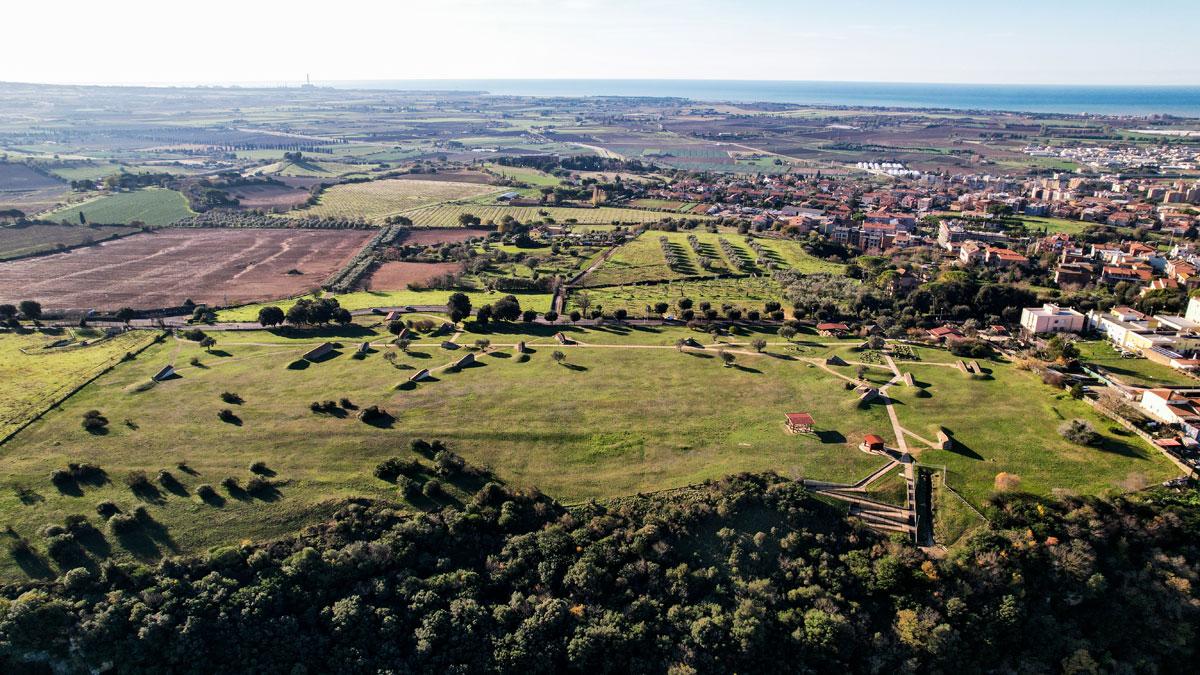
The Tomba Maggi is located in the Etruscan Necropolis of Monterozzi in Tarquinia, a UNESCO World Heritage Site and one of the most important complexes of painted tombs in the ancient Mediterranean.
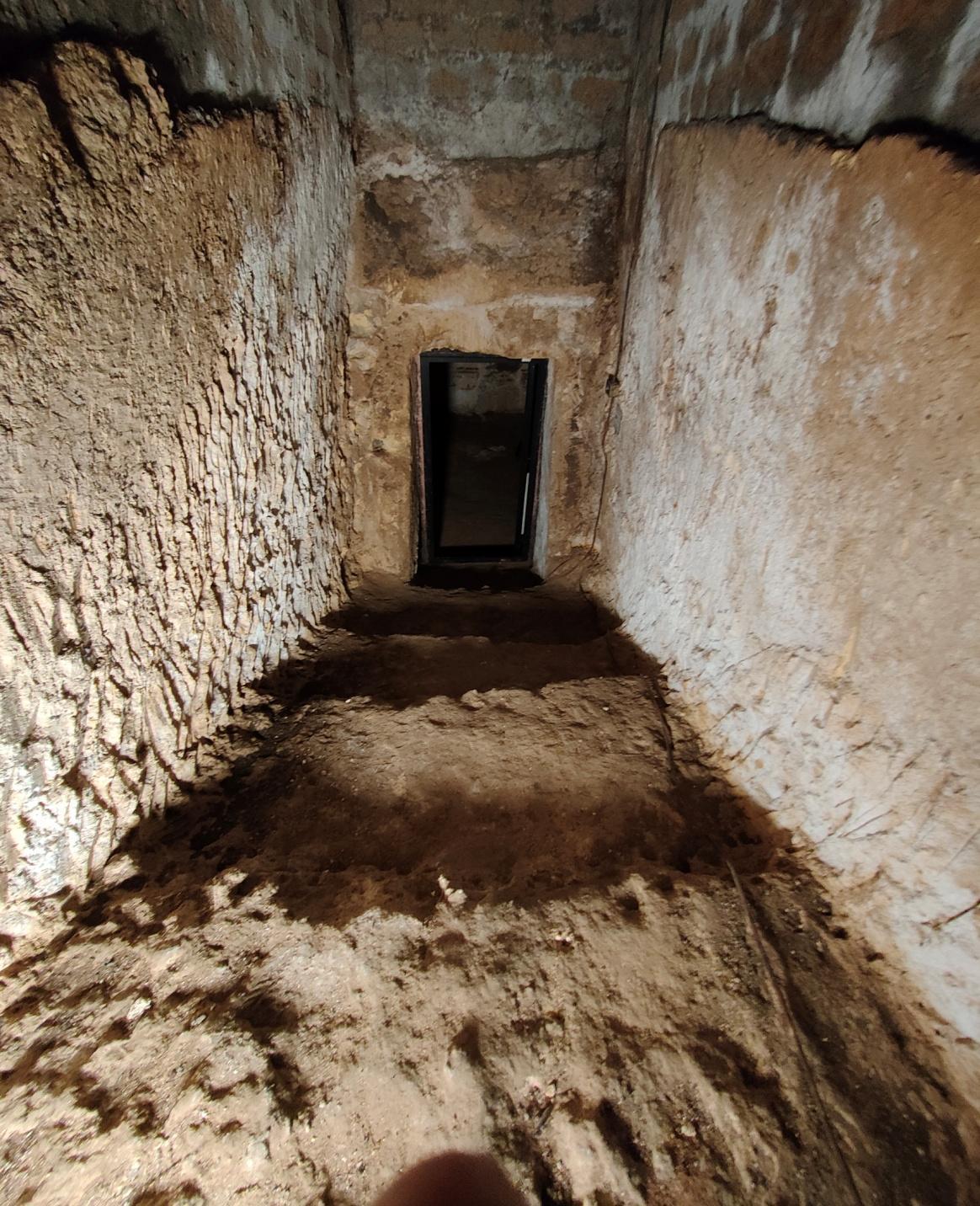
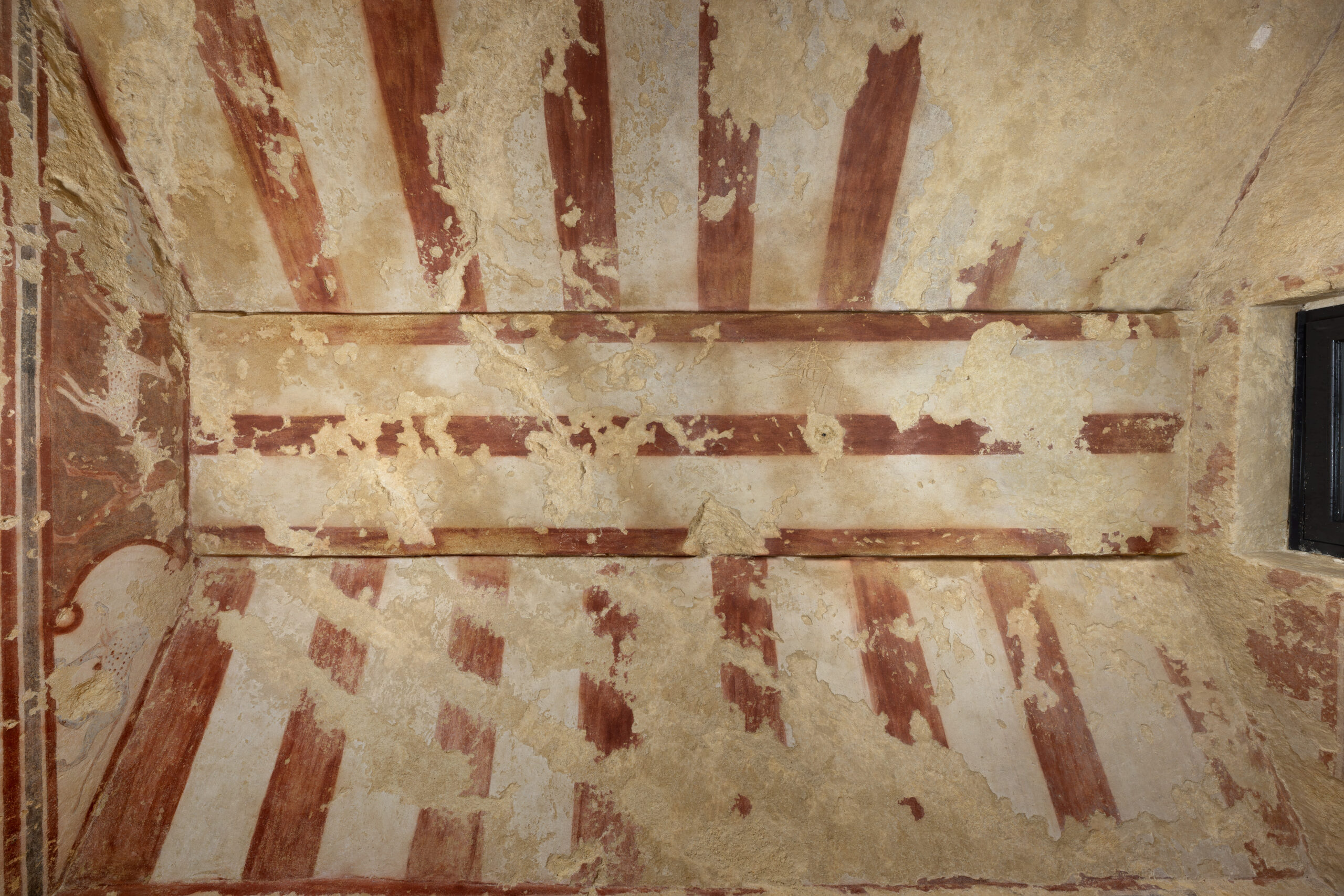
Discovered in 1958 and dating to around the middle of the 5th century BC (c. 450–440 BC), it consists of a burial chamber excavated into macco, the calcarenite typical of the Tarquinia area, with a double-pitched ceiling and central ridge beam.
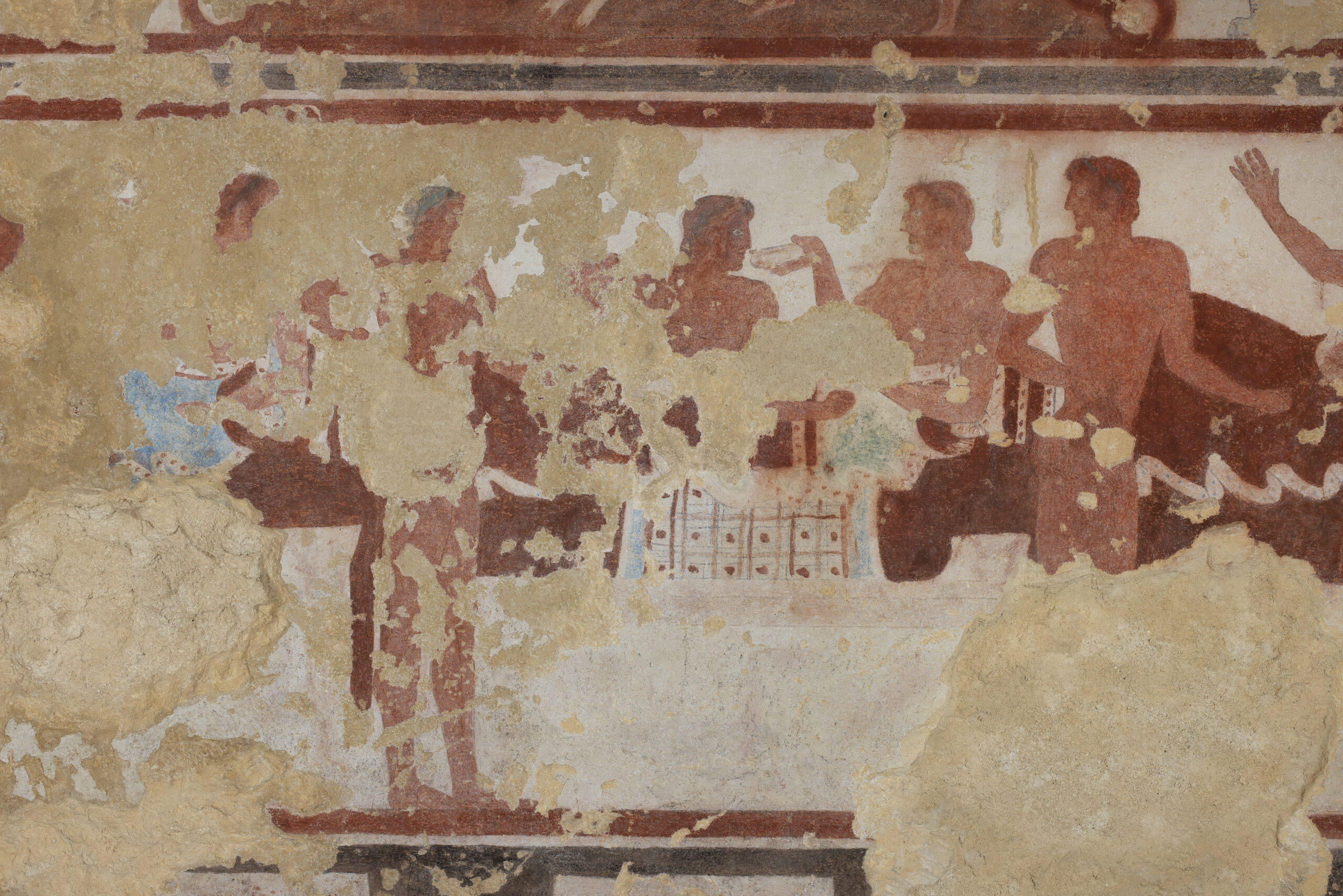
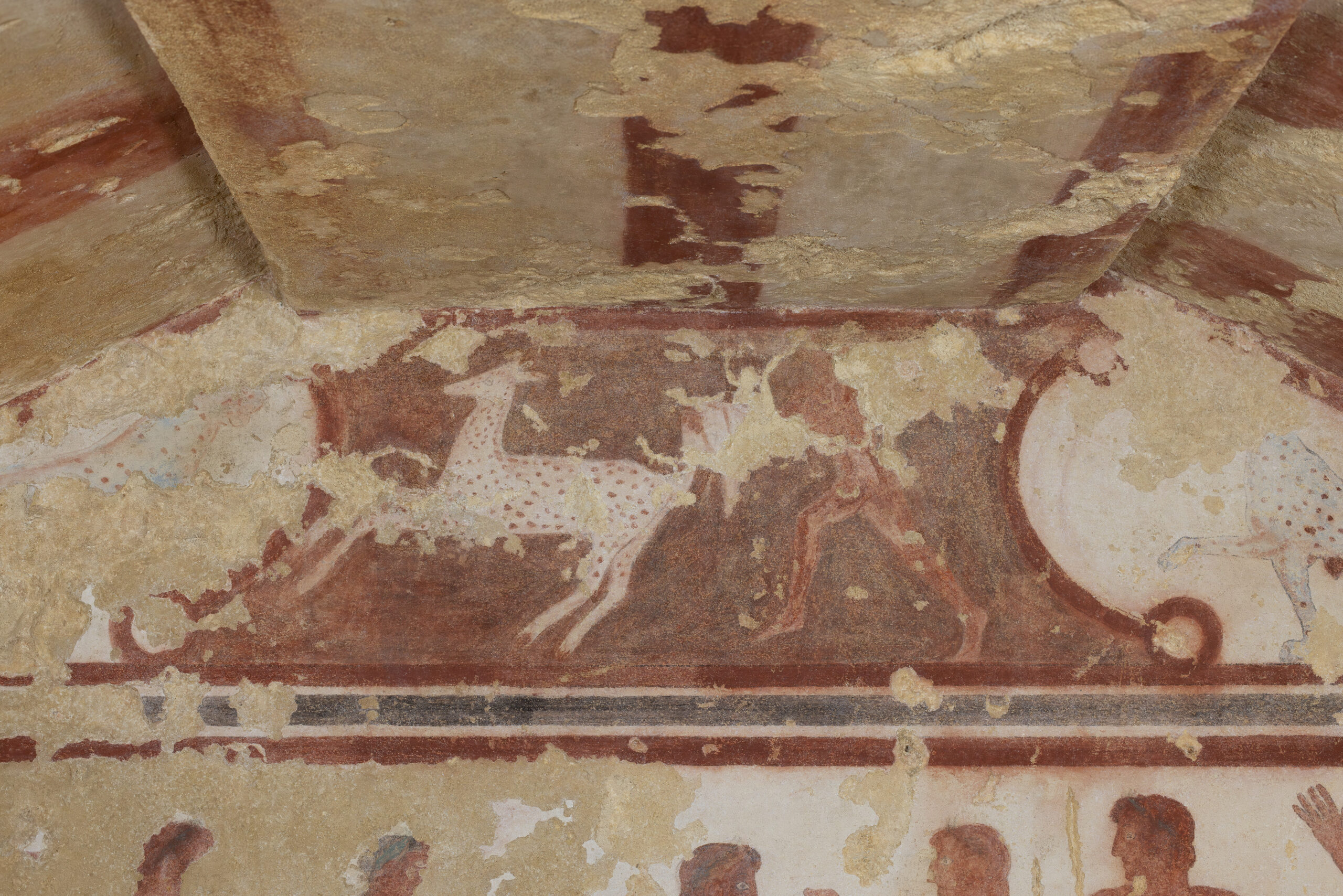
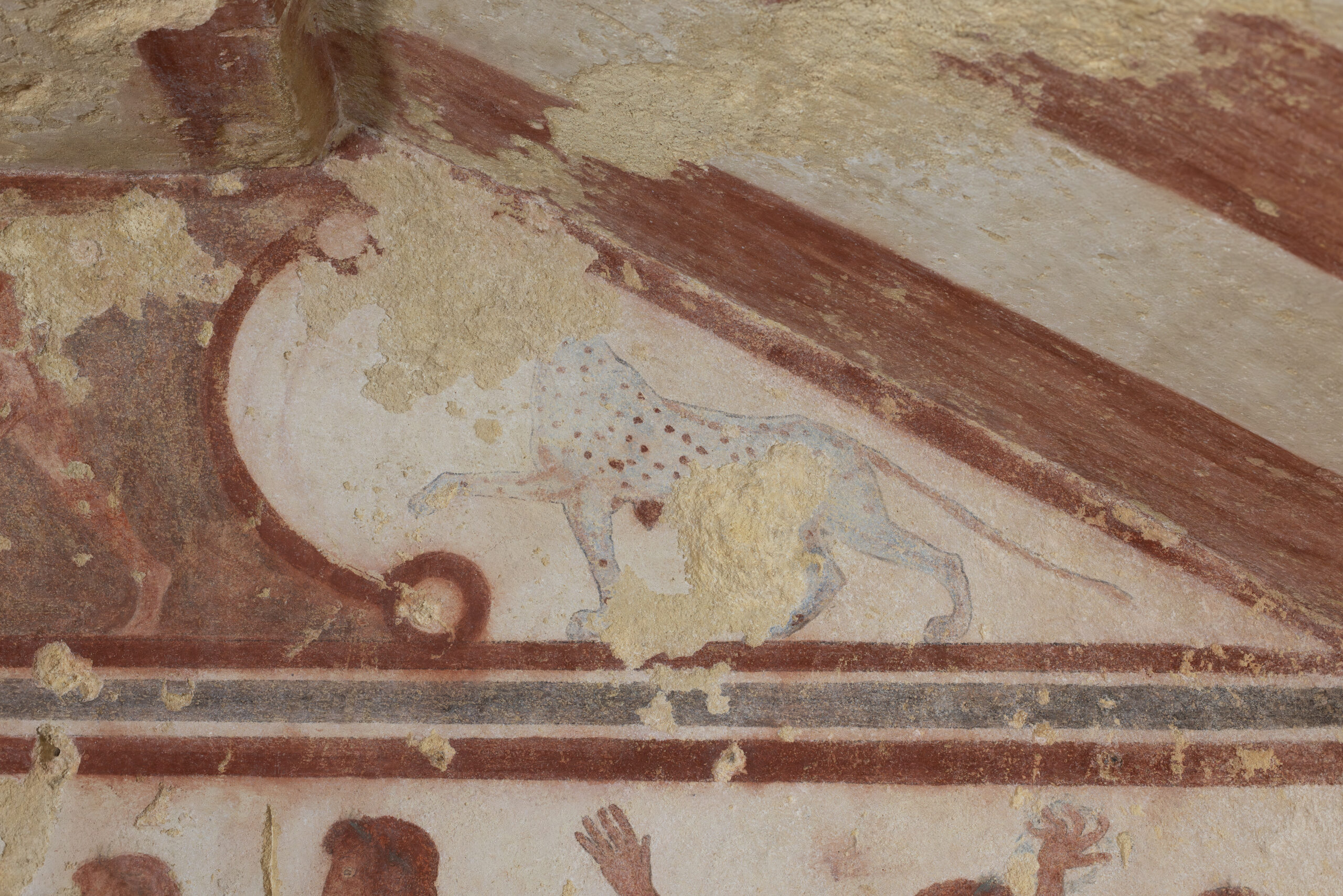
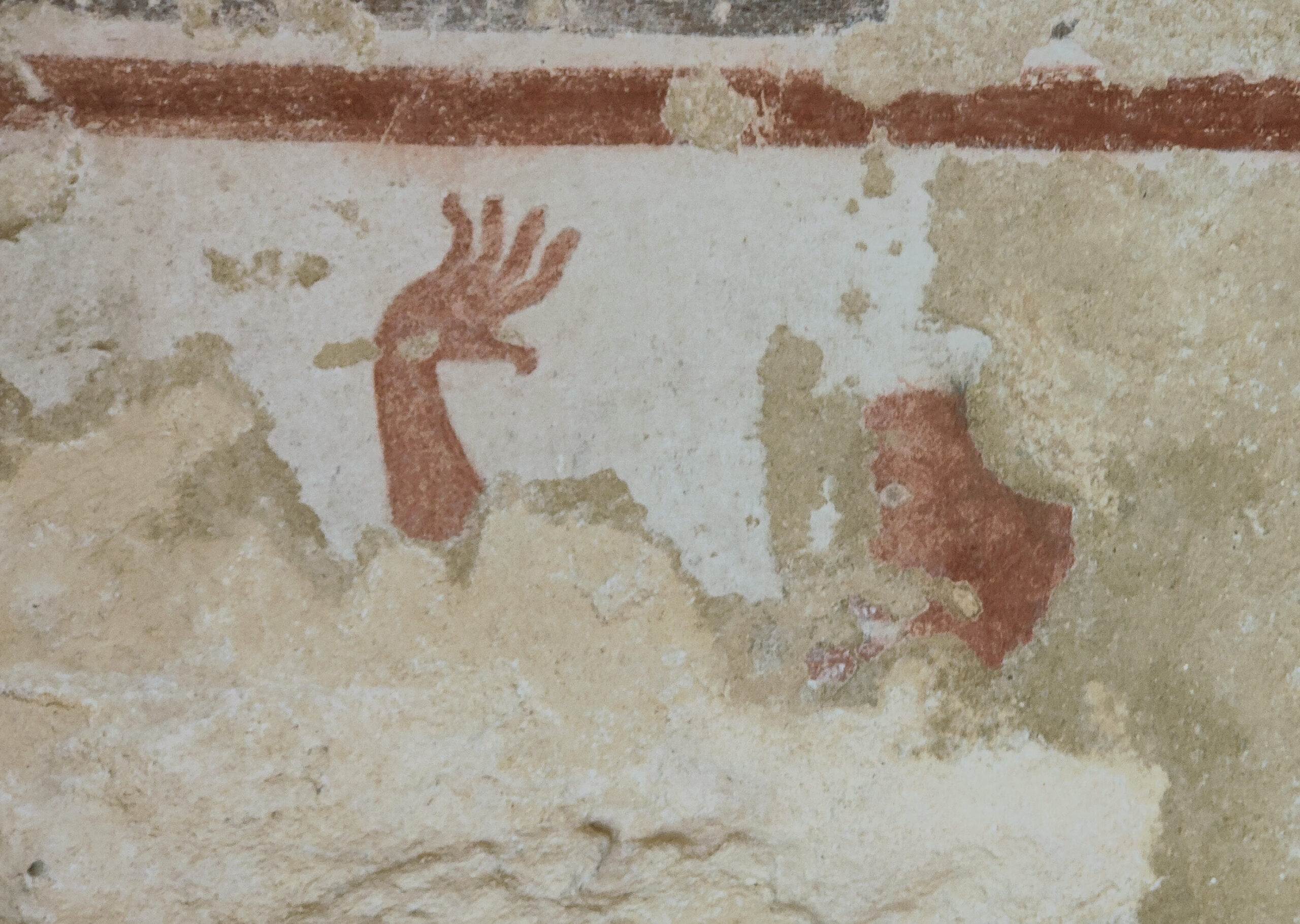
The walls preserve a rich polychrome painted decoration. On the rear wall is a banquet scene with diners reclining on klinai and young servants; musicians, dancers and other figures, now only partially preserved, appear on the side walls. Two boxers are depicted on the entrance wall, while the pediment of the rear wall shows a hunting scene with a hunter and a deer, flanked by large painted felines.
Despite the numerous losses, the Tomba Maggi remains an extraordinary testimony to Etruscan funerary painting and to the aristocratic world evoked through banqueting, music, dance, games and hunting.

The conservation project
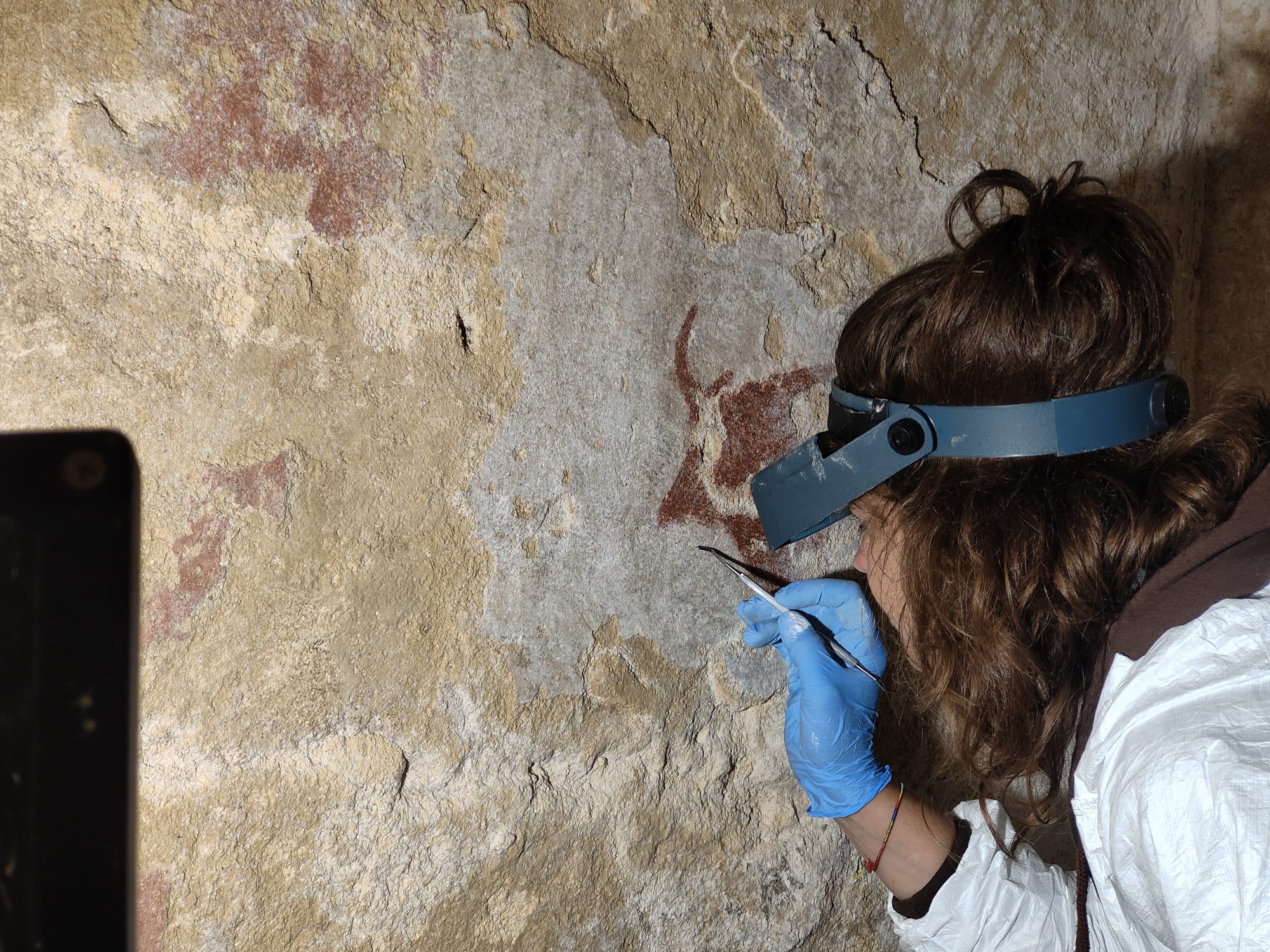
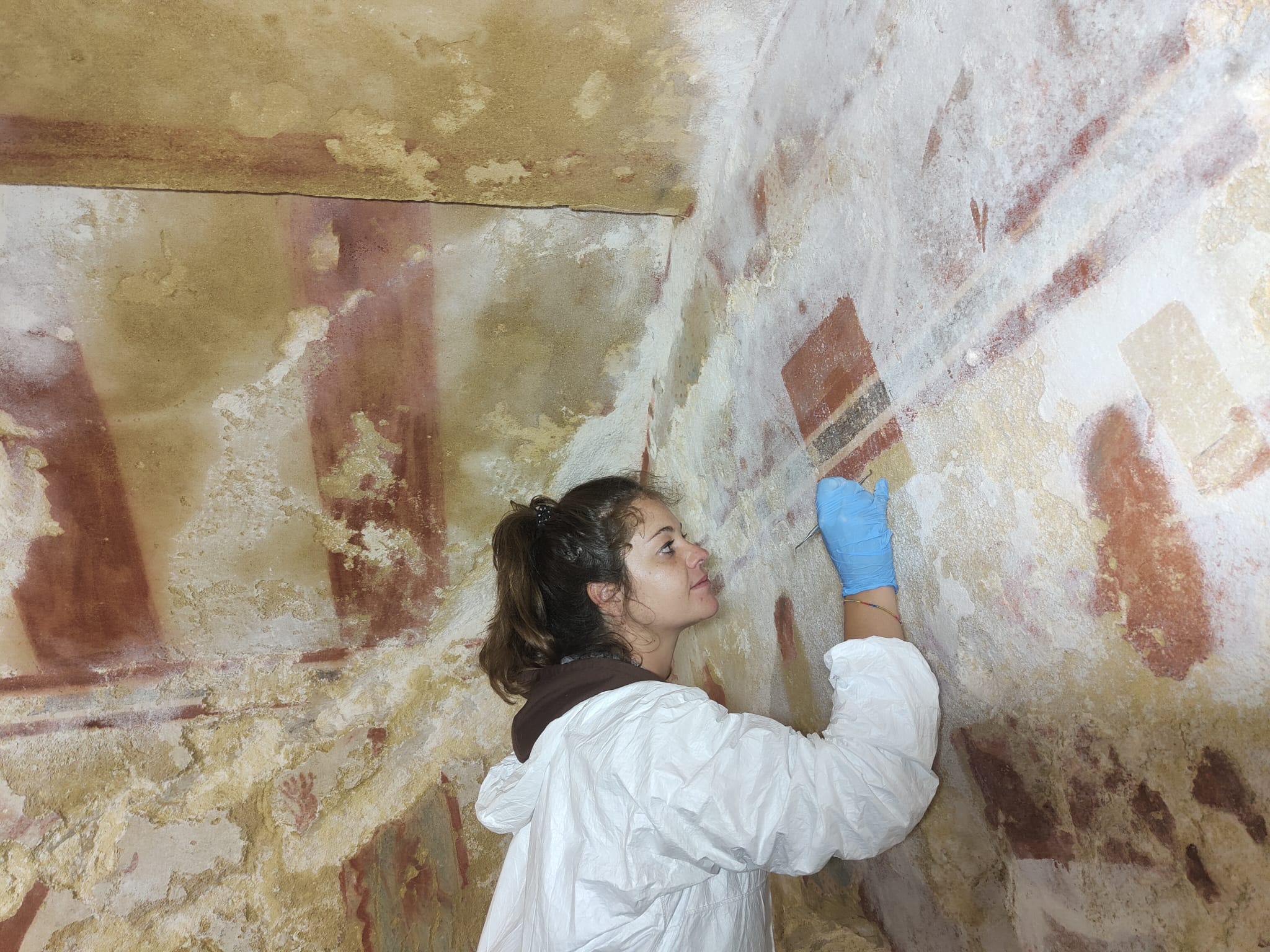
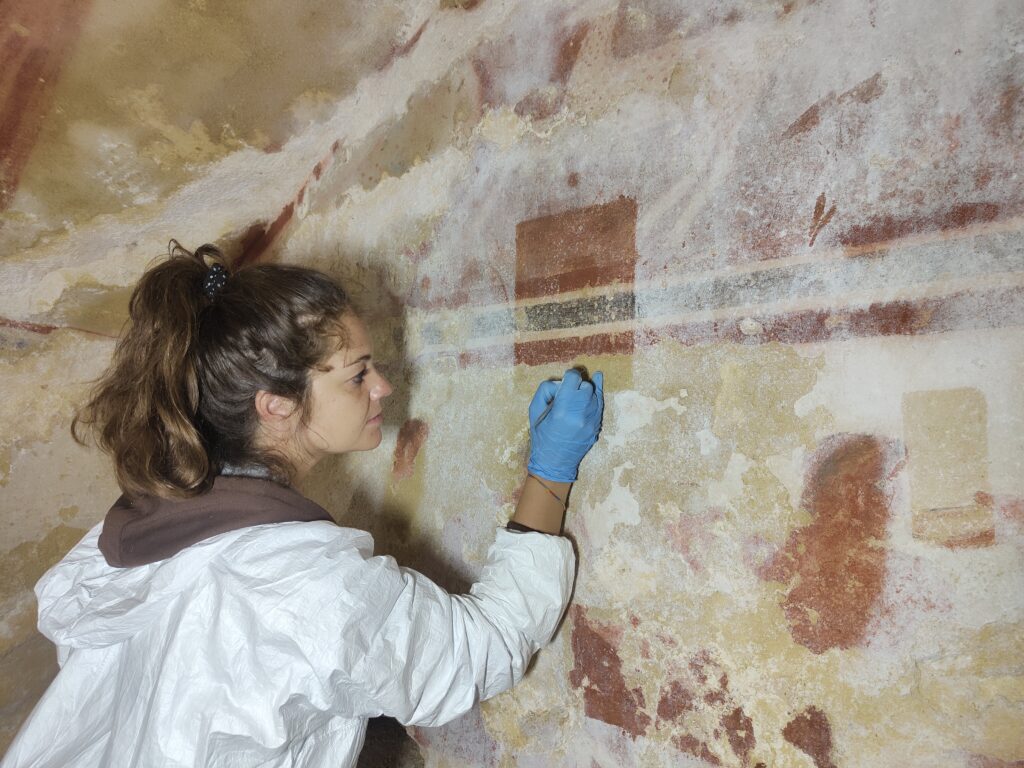
Before conservation, much of the painted decoration was concealed by thick carbonate encrustations and salt efflorescence, together with abrasions and other forms of deterioration that made the decoration difficult to read.
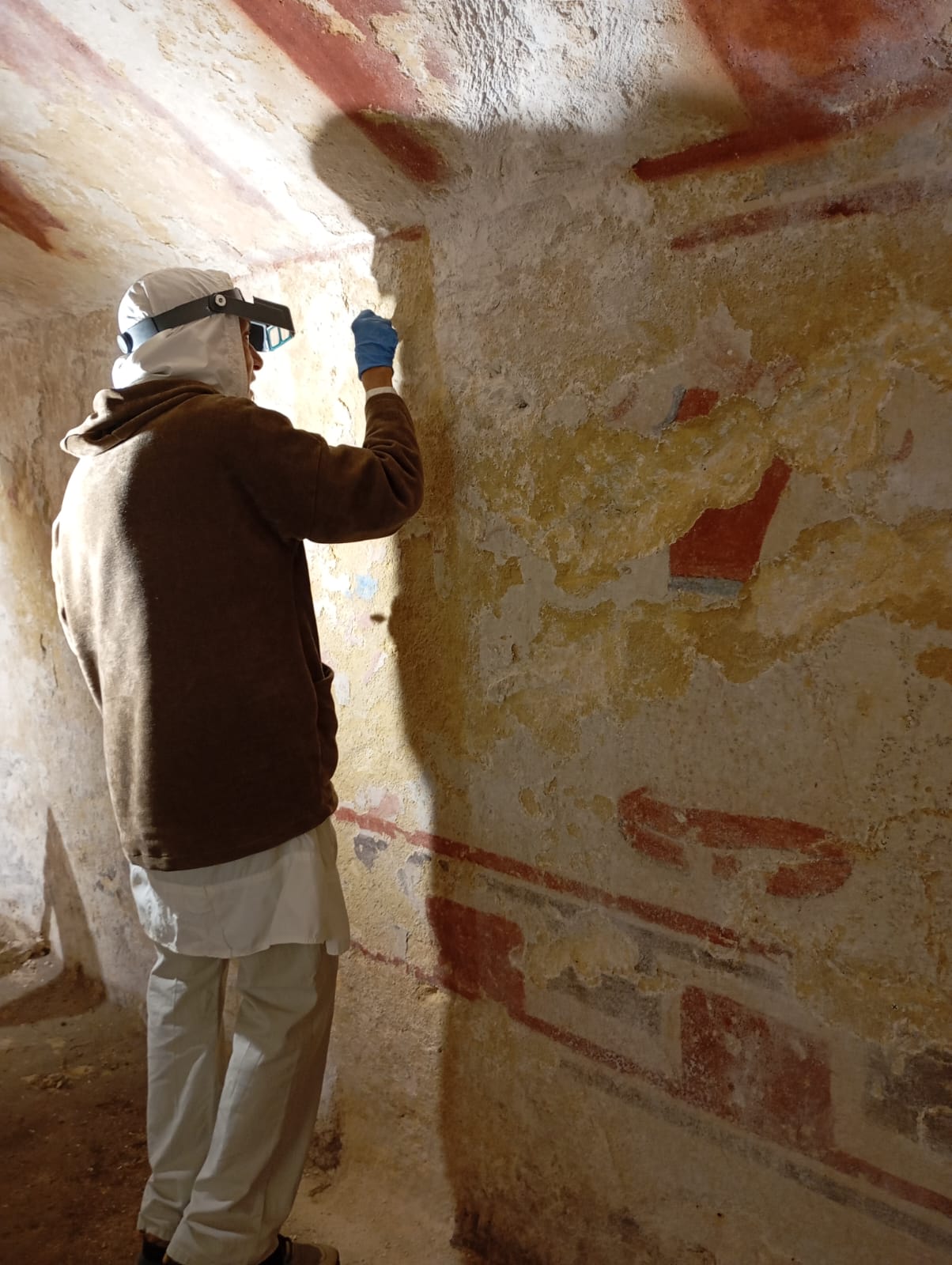
The intervention included consolidation of the plaster, selective cleaning of the surfaces and filling of losses with compatible materials. The gradual removal of the surface deposits brought significant portions of the paintings back to light, recovering colours, figures and details that had become almost completely invisible.
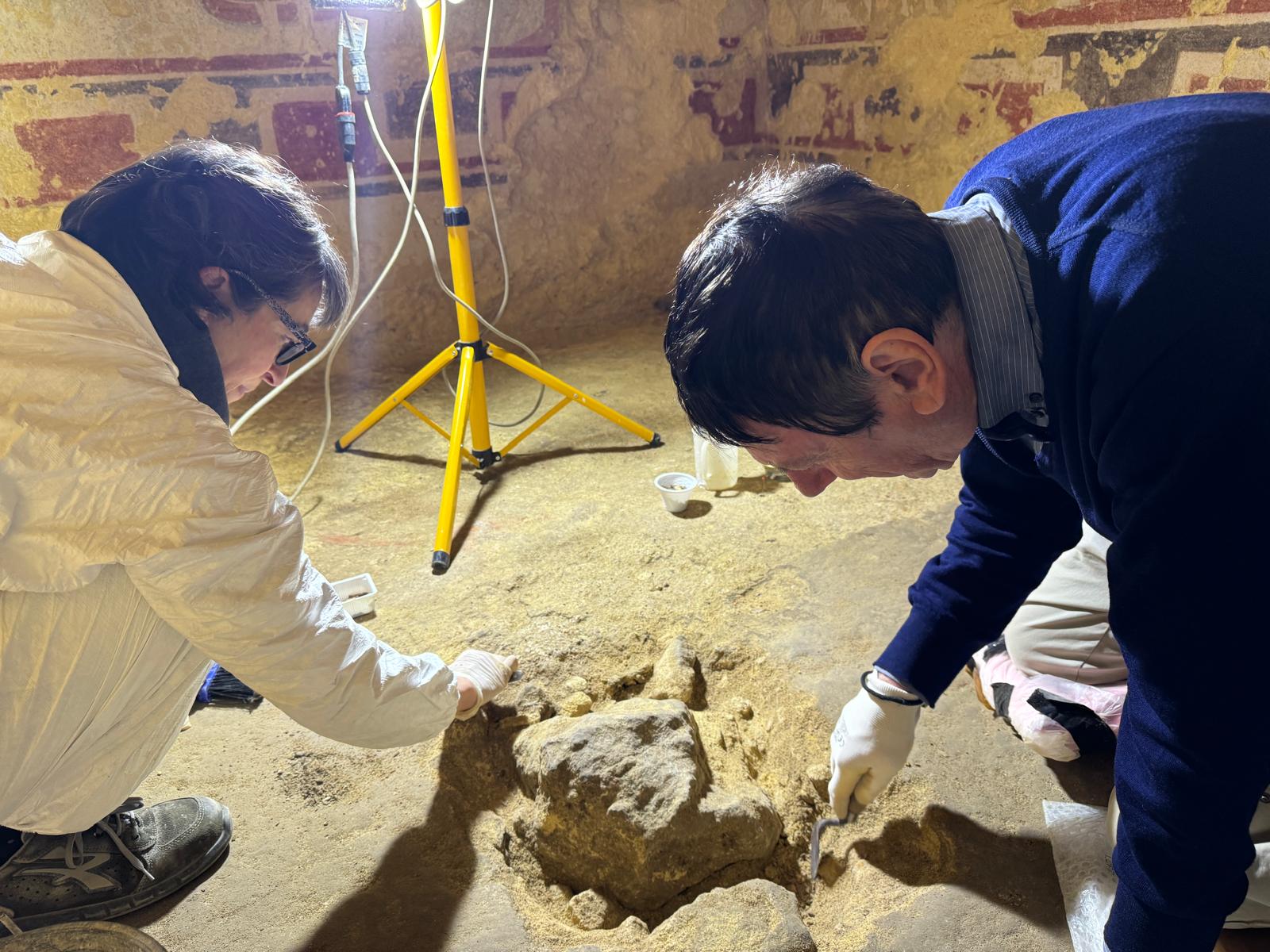
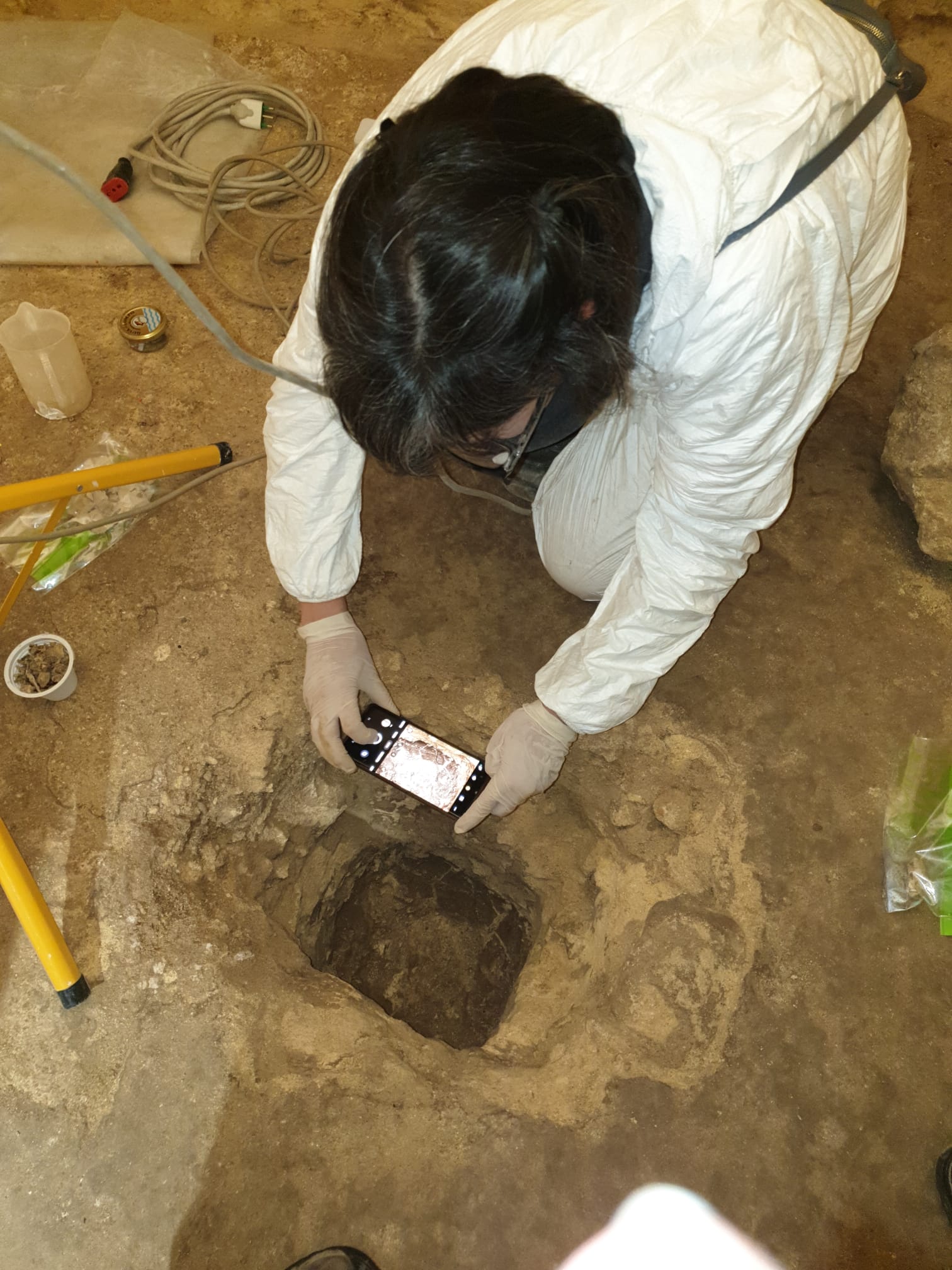
The project integrated conservation, documentation and scientific research, drawing on previous study campaigns, multispectral investigations, geomicrobiological analyses and research into the conservation history of the tomb. The intervention also provided new data on painting techniques, the figurative programme and the transformations undergone by the monument over time.
Collaborations
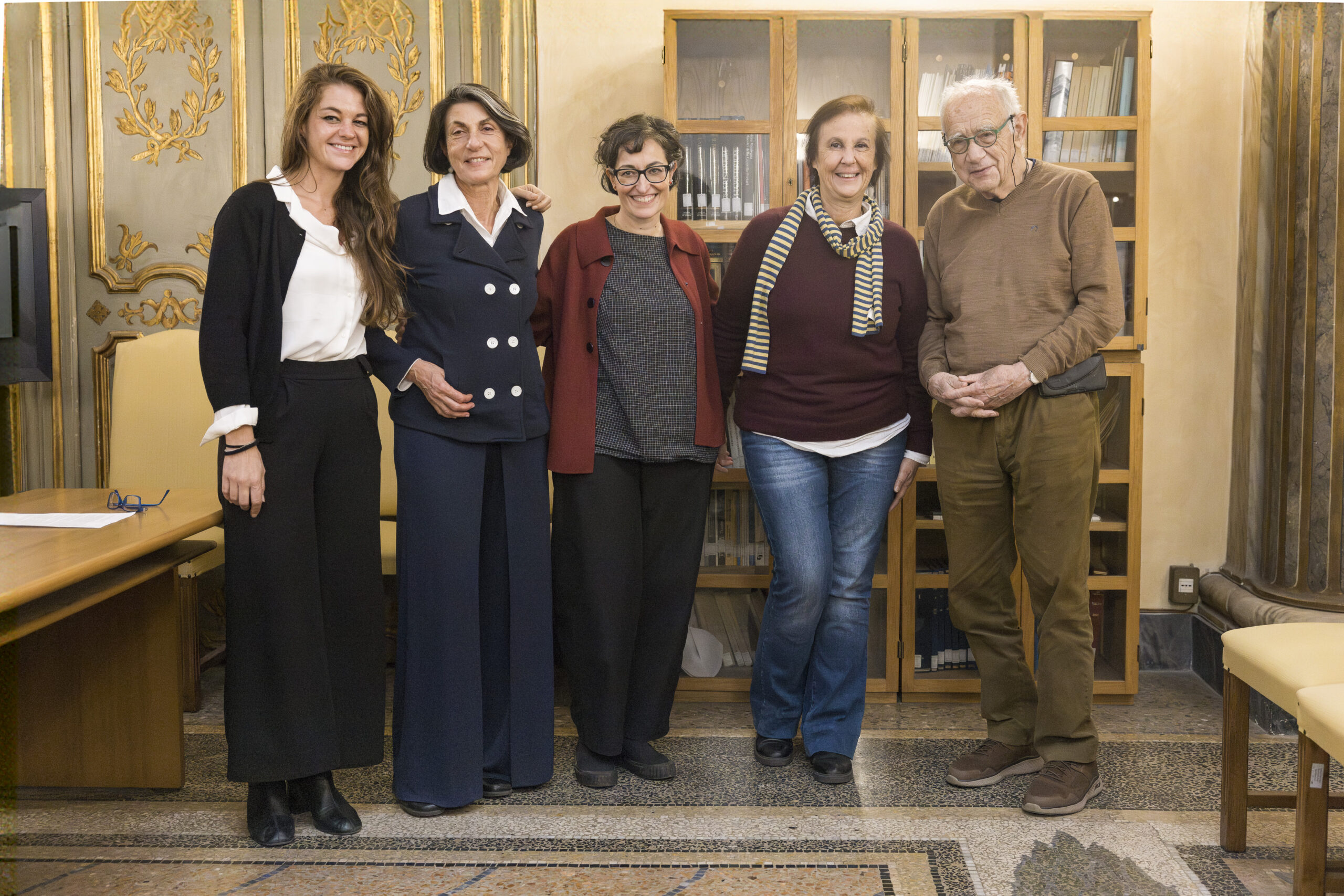
Supervision: Soprintendenza Archeologia, Belle Arti e Paesaggio per la provincia di Viterbo e per l’Etruria Meridionale
Margherita Eichberg, Superintendent
Rossella Zaccagnini, responsible official
Technical and operational coordination of the project: Paola Potenza, conservator-restorer, for the Isabel and Balz Baechi Foundation
Conservation treatment: Mariangela Santella, conservator-restorer
Adele Cecchini, conservator-restorer
Study and documentation of the figurative programme: Cornelia Weber-Lehmann, archaeologist
Multispectral investigations, identification of Egyptian blue and cleaning of the burial chamber floor: Gloria Adinolfi, archaeologist
Rodolfo Carmagnola, archaeologist
Geomicrobiological studies: Teresa Rinaldi
Historical and interpretative studies of surface abrasions: Fabrizio Ansani
Protection and preventive conservation of the hypogeum: Associazione Amici delle Tombe Dipinte di Tarquinia
Photographic documentation: Gabriele Maschio, photographer
Press review and outreach
Bell’Italia, July 2026. View the issue online
Study Day “Il restauro della Tomba Maggi a Tarquinia”, Tarquinia, 21 March 2026. View the page online
Presentation of the conservation work on the Tomba Maggi. Soprintendenza Archeologia, Belle Arti e Paesaggio per la provincia di Viterbo e per l’Etruria Meridionale, Palazzo Patrizi Clementi, Rome, 6 November 2025. View the page online
Storie & Archeostorie “Restaurata la Tomba Maggi di Tarquinia: nuova luce sui colori e i riti del mondo etrusco” 31 October 2025. Read the article
European Heritage Days 2025 Presentation of the conservation work and visit to the Tomba Maggi, Necropolis of Monterozzi, Tarquinia
27 September 2025. View the official page